Andy Warhol, Tarot and the Case for Keeping Interview’s Pop Culture Instincts
A séance with Sarah Potter turns online criticism into a playful argument for bold covers, red, new voices and a magazine that keeps its eye on the now.
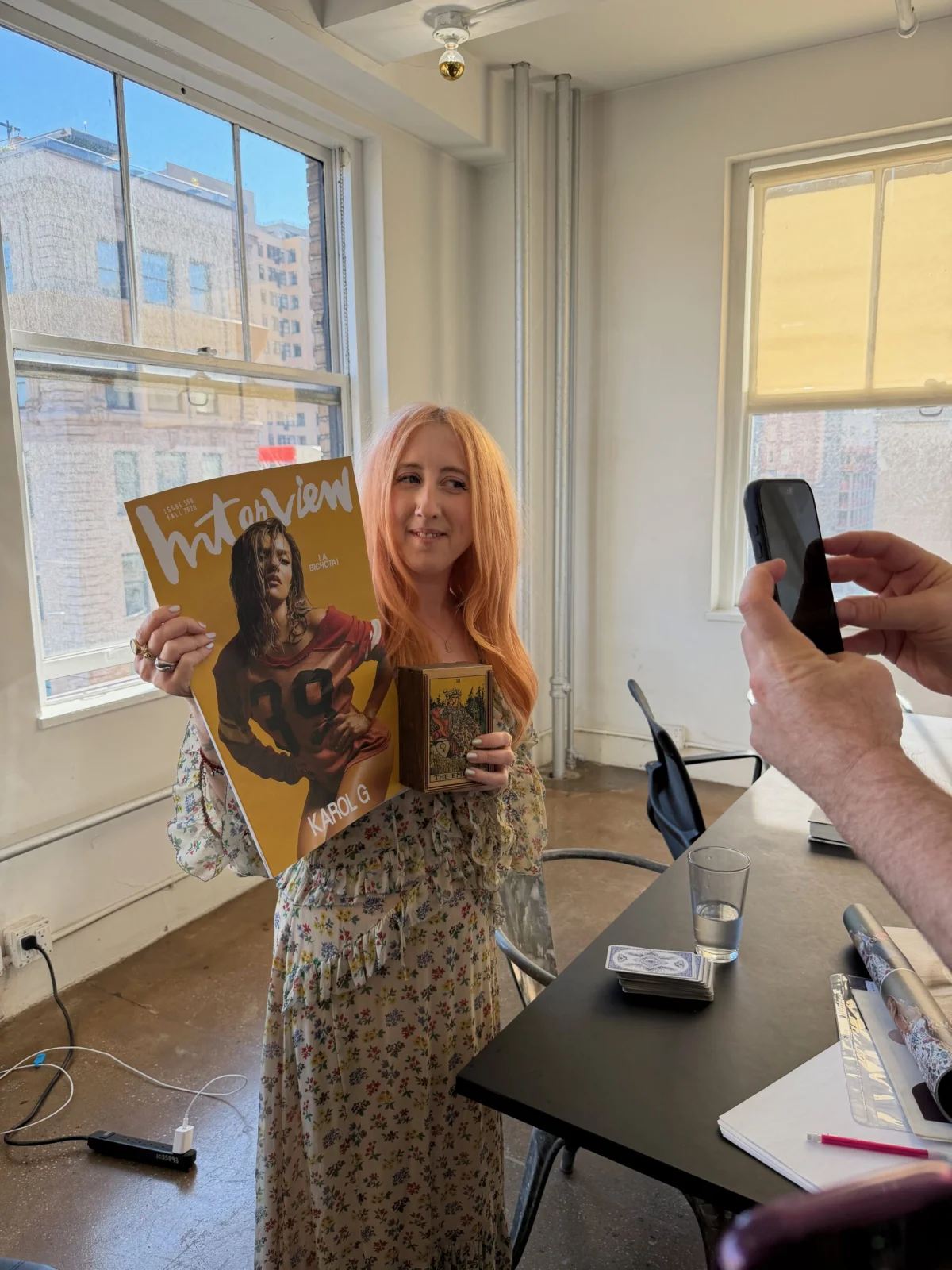
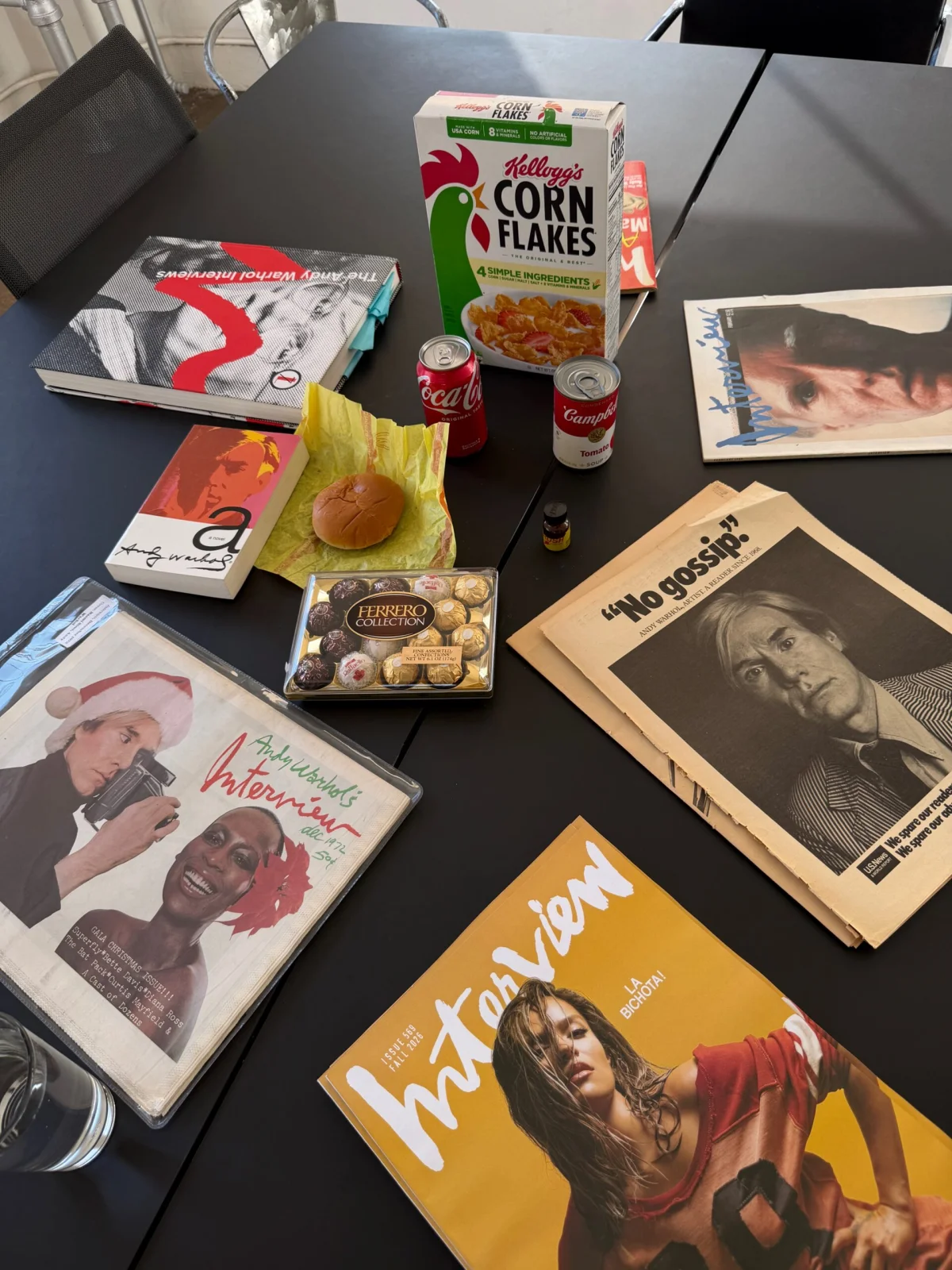
For Interview, the question of whether Andy Warhol would approve of its present-day choices has become part of the spectacle. When readers object to a story, they invoke the magazine’s founder as if his imagined disapproval settles the matter. So editor Mel Ottenberg and his colleagues invited New York medium and tarot reader Sarah Potter to hold a séance and ask what Warhol might make of the magazine now. Their setting offered a few familiar props: Coca-Cola, Corn Flakes and Campbell’s soup. The answers, filtered through Potter’s readings, were less a verdict than a spirited case for attention, celebrity and editorial curiosity.
WEDNESDAY 12:45 PM OCTOBER 21, 2026 NEW YORK CITY
———
A séance built around the magazine’s critics
Potter told the room she had been a psychic child and described mediumship as a chance to feel connected to someone who matters, whether or not the people in the room knew them personally. She compared a session to hosting a party: invitations go out, and whoever is available may arrive. Her explanation set a relaxed tone before the group began asking its main question: was Warhol offended by the stories that draw online backlash?
Potter said she sensed that he was present, amused and comfortable with the staff. She also described him as unexpectedly private and a little timid, while saying he felt proud of the team for carrying his vision forward. In her reading, continuity didn’t require the magazine to look as it did during his lifetime. Pop culture and celebrity had changed; the impulse to pay attention to them could still carry through.
That distinction matters to the magazine’s current editorial identity. Ary Russell explained that critics often invoke Warhol whenever a social post or story displeases them. Potter’s first response, she said, was that he wasn’t reacting with anger. What entertained him was the fact that people were making the argument at all. Ottenberg admitted the staff enjoyed that reaction, too.
Potter framed online outrage as a form of attention, something that would have interested an artist drawn to celebrity and popular culture. In her account, the magazine shouldn’t expect every reader to like the people it features. A story can be worth pursuing because its subject is compelling, not because the subject has universal approval. Ottenberg put the point in his own blunt terms: Interview isn’t Profiles in Courage. Potter agreed that the instinct fits the vision she was describing.
Her reading also offered a reassuring interpretation of the staff’s place at the magazine: Potter said Warhol trusted the team’s point of view, and even joked that he still had a hand in hiring. That claim belongs to the séance’s playful frame, but it sharpened the editorial question underneath it: what does it mean to keep a founder’s vision alive when culture, fame and the ways people encounter a magazine have changed?
Pages, covers and a flash of red
Asked to name a story that had especially pleased Warhol, Potter said she was seeing a February issue and a cover that seemed to light up. The team brought out the March 2026 issue, which featured Robert Pattinson and Zendaya. Russell noted that the cover had arrived in February and described it as a significant one for the magazine.
As Potter flipped through the issue, she paused at the Chloé Zhao feature, then at a story about Aidan Zamiri. The staff pointed out that both subjects were directors. Later, Potter stopped at a Paris Hilton feature and called her an icon. She said the contemporary celebrity connection made sense to her: Warhol would have been drawn to Hilton as a figure who represented the culture of her moment.
Ottenberg placed the Hilton pages beside a December 1972 Interview cover, spotting a shared red palette. Potter took the color as a cue: red, she said, felt powerful for the magazine and made Warhol happy. Her practical direction was simple—bring it in often. She also urged the editors to keep the magazine big, matching its scale to its appetite for large personalities and energetic ideas.
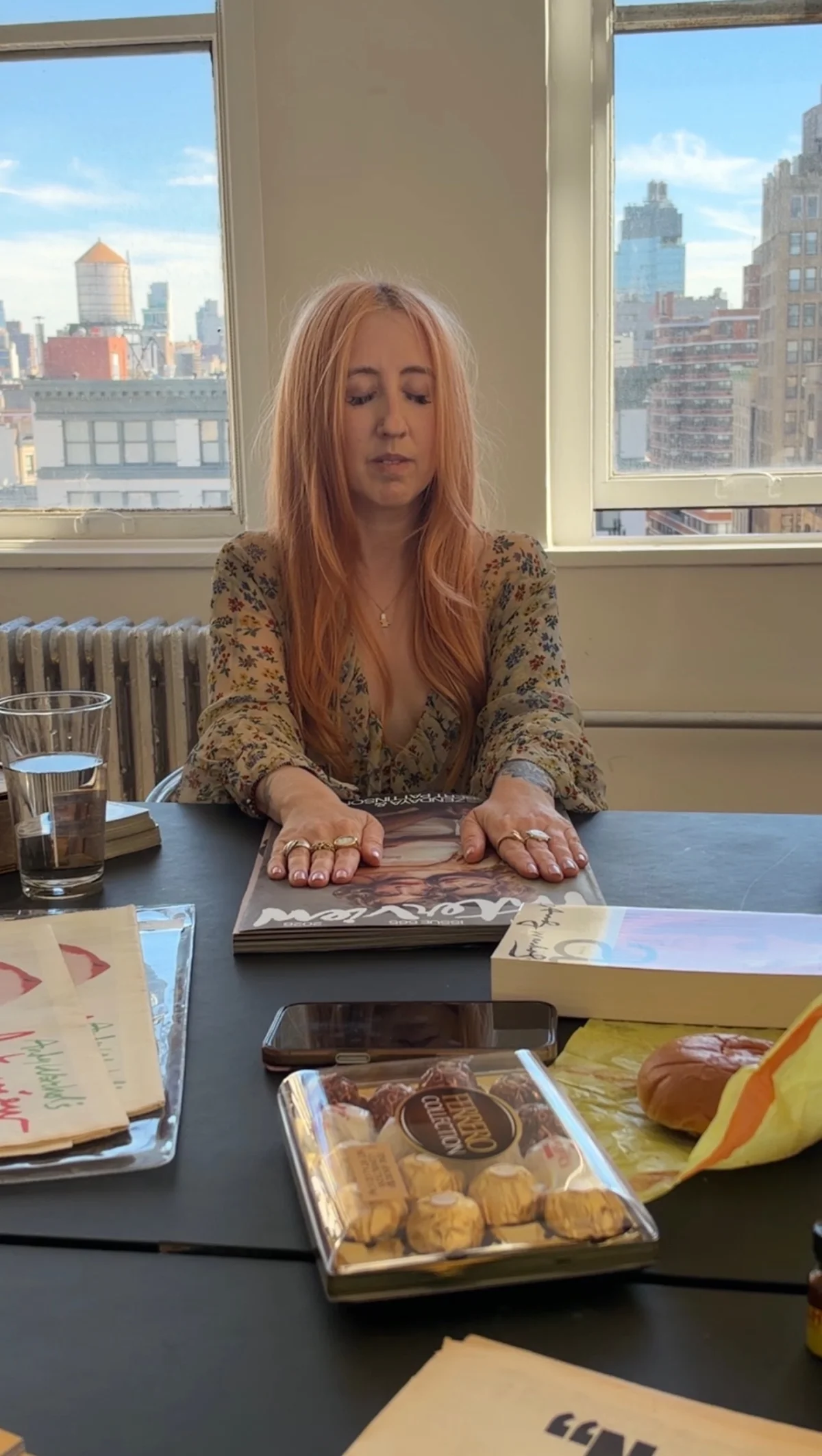
The exchange around Hilton turned color into something more than decoration. In the room, a visual echo between an older cover and a contemporary story became a way to talk about what endures: recognizable visual confidence, a fascination with fame and a willingness to let the present supply its own icons. Potter’s reading gave the editors a usable creative prompt, even if readers can decide for themselves whether they see a supernatural sign in the red.
The team also asked about Kim Kardashian, who had appeared on an Interview cover. Potter said she sensed laughter and humor from Warhol. It was a brief answer, but it sat neatly beside the larger idea running through the session: celebrity isn’t a fixed roster of approved names. It’s a changing conversation about who commands attention and why.
OnlyFans, pleasure and self-presentation
Emily Kirkpatrick raised a more pointed criticism: people often claim Warhol would have objected to the magazine covering OnlyFans creators. Ottenberg countered that Warhol had photographed nude subjects and was drawn to sexuality. Potter’s answer was unequivocal within her reading: she believed he would support OnlyFans creators, sex workers and porn stars.
She connected that response to the Nine of Cups tarot card, which she described as a wish-fulfilled card associated with pleasure and enjoyment. To Potter, the card suggested people choosing how to live and present themselves, a subject that could be understood as art. She found it hard to reconcile that idea with the claim that Warhol would oppose such coverage, and characterized the energy she sensed as open-minded.
That exchange brought the séance back to the magazine’s editorial judgment. Featuring someone doesn’t have to mean endorsing every part of their public image; it can mean recognizing that their presence says something about the culture. Potter’s position was that Warhol would have understood that distinction and would have been receptive to a broader range of self-presentation.
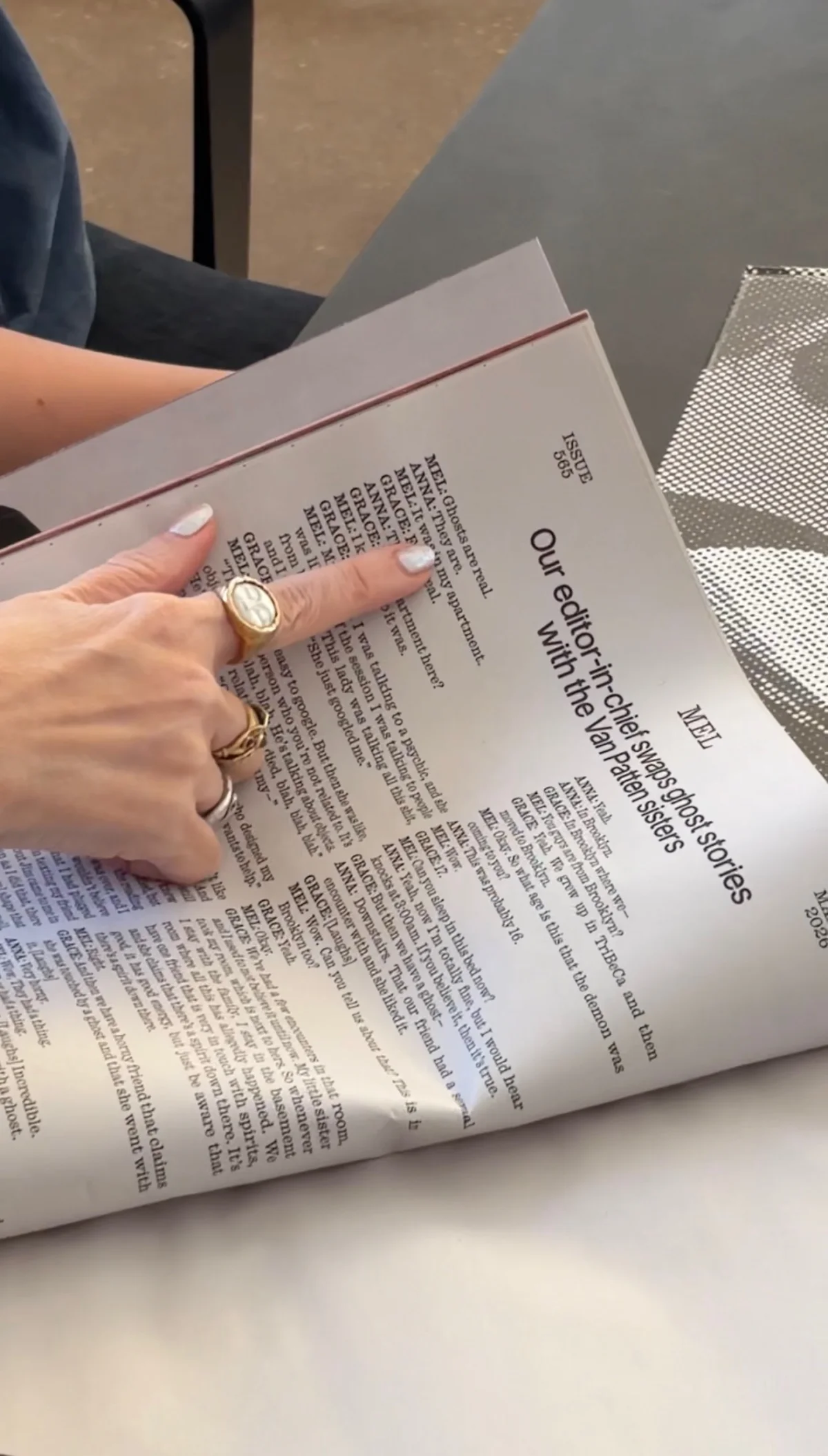
Then the session produced a coincidence the group found hard to ignore. Ottenberg opened his editor’s letter and realized it was about ghosts. He said he had written about telling actresses Anna and Grace Van Patten about a ghost in his apartment, though he hadn’t remembered the detail. Potter pointed to the words “Ghosts are real” and said the moment matched the humor she associated with Warhol.
Ottenberg said another medium had previously helped him address what he described as a possibly troublesome spirit, and had offered a similar message. The team wondered aloud whether the ghost might be Warhol. Potter didn’t identify it as him; instead, she returned to her impression that Warhol was giving Ottenberg information in some way. The exchange stayed in the realm of personal belief and uncanny timing, with the printed letter providing the session’s most tangible surprise.
What the cards suggested next
When Emily Sandstrom asked whether there was anything the magazine was doing that Warhol disliked, Potter drew attention to travel, celebration and weddings. Russell said she had long wanted to write about weddings, while Kirkpatrick wondered what an Interview approach would look like. Potter didn’t prescribe a format. She suggested that the subject was worth exploring, provided the magazine found an angle unlike anyone else’s.
The idea landed as an editorial challenge rather than a ready-made assignment. Weddings are familiar territory for magazines, so the question would be how to make the subject feel connected to Interview’s interest in personality and culture. Potter’s reading offered a nudge toward experimentation, while leaving the editors to work out the form.
Russell then asked whether Warhol had a thought about a future cover. Potter’s guidance was to pay more attention to who excites Gen Z. Ottenberg said the magazine needed a Gen Z cover, and Potter linked the suggestion to Warhol’s interest in what was happening now. That answer made the séance’s central point particularly clear: a legacy rooted in popular culture needs room for new audiences and new faces.
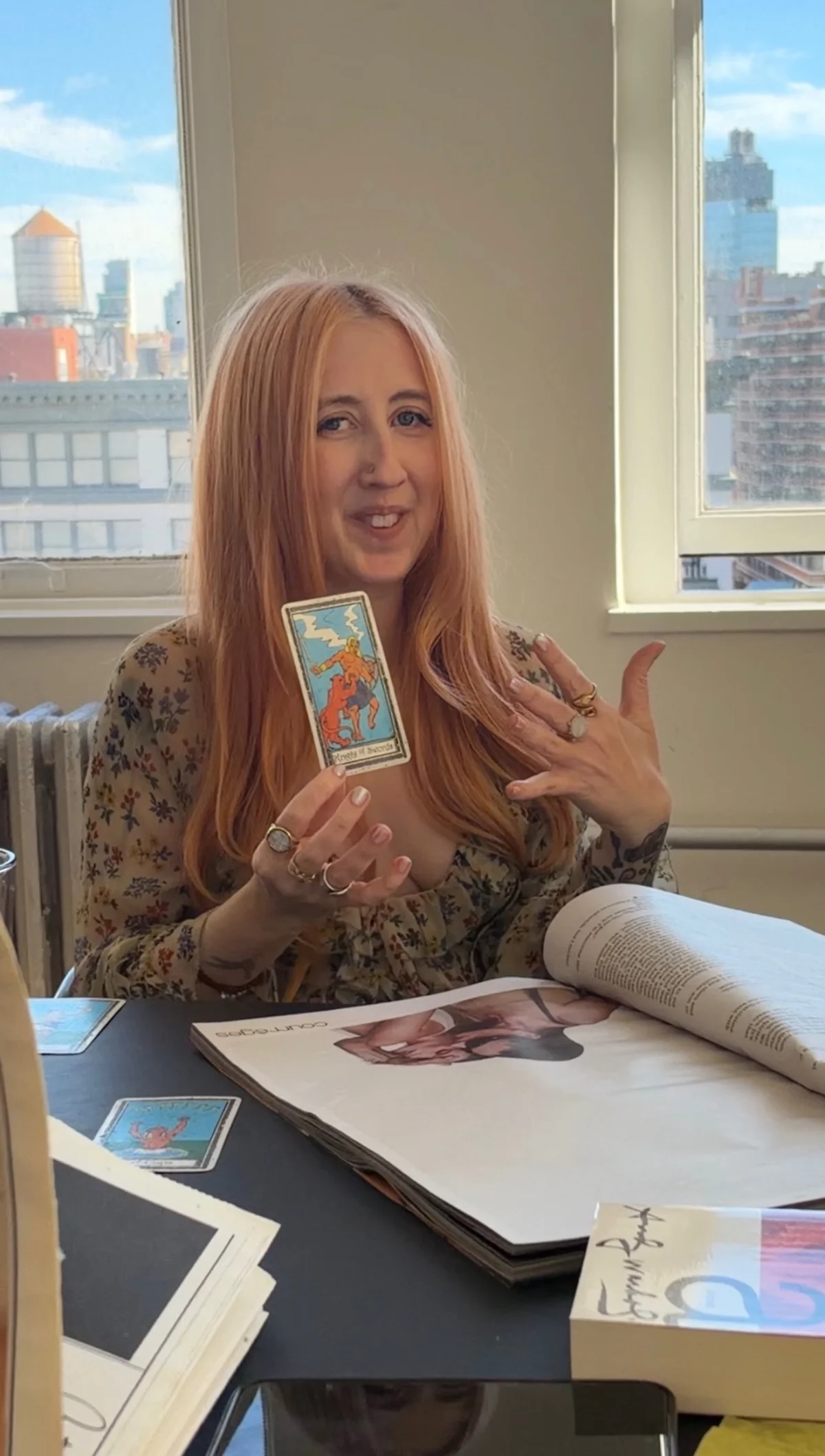
Before the group closed the session, Potter asked whether the staff held parties. Ottenberg said they loved them. Potter delivered what she presented as Warhol’s final instruction: “Have a party.” She tied the message to the celebration card she had drawn, encouraging the group to make room for fun.
The séance ended with everyone holding hands, closing their eyes and taking a deep breath as Potter thanked Warhol for joining them and sharing his energy, vision and talent. Whether a reader takes the encounter as spiritual communication, theater or a lively editorial exercise, its advice is easy to translate into magazine terms: keep looking at the culture as it changes, trust a strong point of view, and make the next issue feel alive in its own moment.
The post Is Andy Warhol Rolling in His Grave? We Held a Séance to Find Out appeared first on Interview Magazine.