Ken Carson’s High-Energy Sound Runs on Instinct, Discipline and a Love of the Stage
The Atlanta rapper talks tour prep, fast songs, studio habits and the unlikely thread connecting his music to Green Day and Jackass.
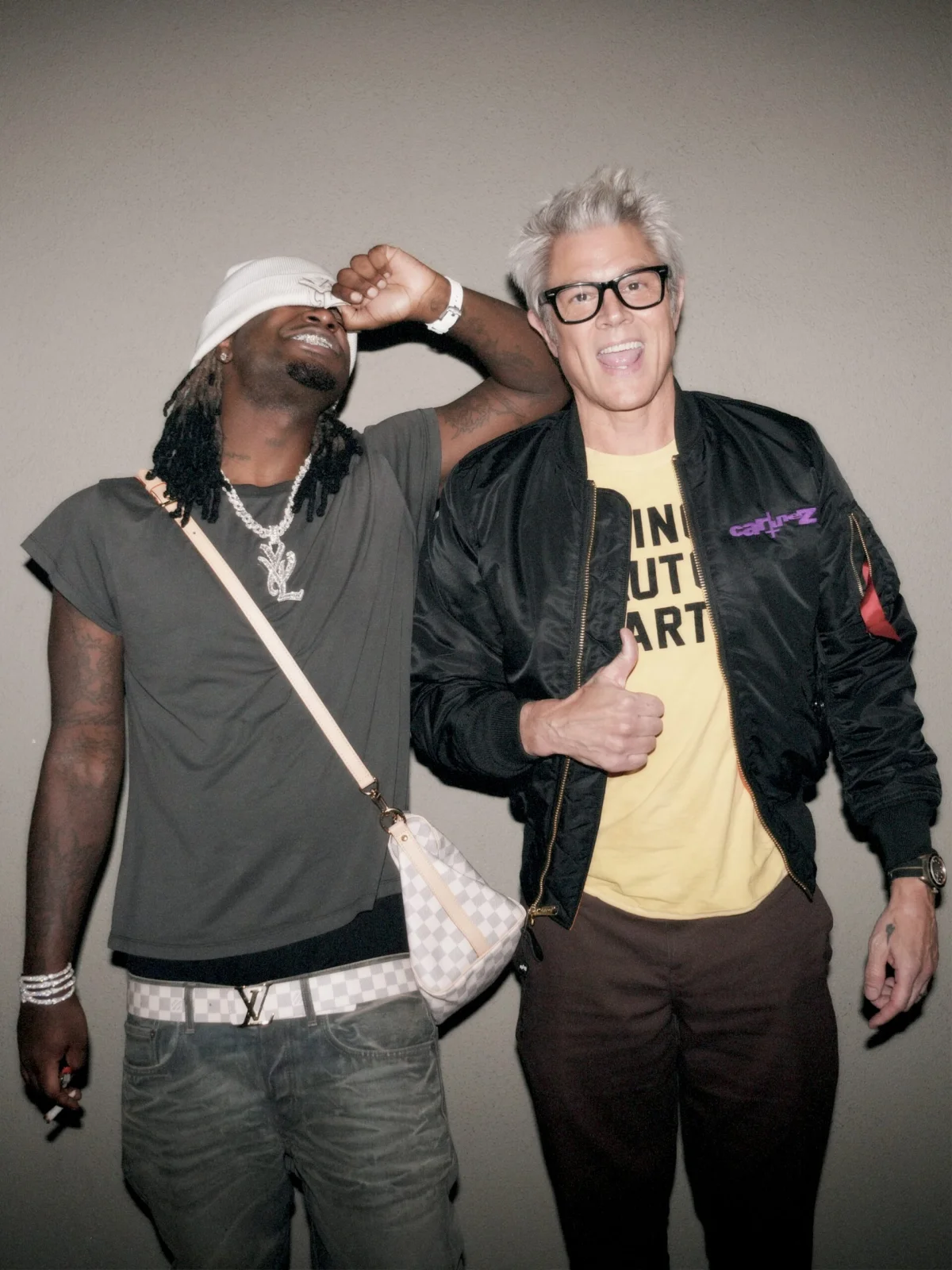

Ken Carson treats a song like a live wire: catch the spark, get the energy out, and don’t stretch the moment past its natural charge. That instinct sits at the heart of his music and his shows, where movement matters as much as the tracks themselves. It also helps explain why the Atlanta rapper gravitates toward short songs, spontaneous performances and a work schedule that leaves little room for switching off.
Carson spoke with Johnny Knoxville ahead of his Xperimenting tour, scheduled to begin at the end of August. Their conversation moved between the physical demands of performing, Carson’s early studio years and the childhood entertainment they share. Knoxville’s children are fans of Carson; Carson grew up watching Knoxville in Jackass. The connection gave their exchange an easy rhythm, with both men talking plainly about what keeps them working.
Carson began making music at 13, around the time he attended his first concert, a Young Thug show. Seeing a performer command a crowd made an impression. Since then, he has become a leading name in rage rap, with projects including Xperiment and Xperiment-Cartunez pushing his sound into louder, less predictable territory.
MONDAY 1:30 PM JULY 27 2026, ATLANTA
Preparing for the rush
Knoxville opened on the physical intensity of Carson’s performances: a crowd in motion, an artist who keeps moving, and a set that asks for stamina. Carson said he trains twice a day for two months before touring, and he was already thinking about getting in better shape for the next run. The preparation matters because his idea of a show depends on sustaining energy rather than conserving it.
For the upcoming tour, Carson planned to bring underground rappers xaviersobased and Prettifun with him. He described the opportunity as a way for the two artists to gain exposure, a gesture that connects his own rise to the people and rooms that opened doors for him. His route into the industry began with 808 Mafia, the production group co-founded by TM88.
Carson was about 15 when he first got access to those studio sessions. His friend Lil 88 is TM88’s nephew; after Carson mentioned watching 808 Mafia sessions, Lil 88 connected him with his uncle. The invitation was simple: come by. Carson did, and kept returning. He recalls that his first contribution was rapping, rather than writing or producing.
He was also unusually young when he crossed paths with Playboi Carti. Carson had finished school early and was 15 or 16 when Carti noticed him around the studio. Carti asked what he was doing there so often, then offered to make him his first artist. Carson became the first artist on Opium, before the collective had taken shape as an idea. The opportunity came early, but Carson’s account makes clear that he was already paying attention to how the people around him worked.
At around 16, he spent time living with Young Thug, who taught him about music and personal style. Carson watched Thug record in front of other people, then studied the process for himself. He also learned by observing Carti and Future. Rather than copy one person’s approach, he says he took those experiences and turned them in his own direction. He remains close with his mother and says that, even while pursuing music, he kept in mind the hope of helping her.

Why he trusts the first take
Carson doesn’t enjoy writing songs out in advance. He once tried spending hours crafting what he hoped would be a great track, recording it after the writing process. The result didn’t make the cut, and, in his view, it didn’t measure up to what he could do by freestyling. His preference is to step to the microphone and let instinct take over.
That approach isn’t a claim that making music requires no effort. Carson describes the work as a matter of learning the right kind of focus: when he’s in front of the mic, muscle memory and instinct take over, while deliberate writing can make him overthink the performance. His account points to a practice built through repetition, even if the final delivery feels immediate.
The songs themselves reflect that preference for impact. Knoxville praised their frequent two- or three-minute length, comparing the economy to The Ramones. Carson said he wants to release a concentrated burst of energy, and doesn’t think every track needs a fixed arrangement of multiple hooks and verses. In his view, five minutes is too long to sustain that particular charge.
His first major hit, “Yale,” came from his second EP and drew attention quickly. He also singled out Teen X, which he made in Los Angeles. Carson credited Starboy and Outtatown, his producers from Amsterdam, with making the track. They remain central collaborators, with Carson saying they have more placements across his discography than anyone else.
Carson’s production process gives him options. He works with producers in the studio and also receives beats remotely, keeping ideas on his phone for a later session. Asked how many of 20 beats tend to work for him, he estimated 17. He made a point of crediting the people behind that consistency, describing them as dedicated collaborators. His list included Starboy, Outtatown, Lil 88, Lucian, F1lthy, AM, Cliff Shayne, Legion, Skai, Four3va, Dulio and 2Hollis.
From the crowd to the stage
Carson’s first concert experience helped set his ambitions in motion, but he didn’t grow up attending many shows. When he first went on tour with Young Thug, the scale of the audience surprised him. He understood what a concert was, but hadn’t felt the pull to attend one. Then he saw a crowd gathered for Thug and wanted to be onstage himself.
That memory makes his answer about his favourite concert especially telling: Green Day. Carson saw the band at the Braves’ stadium, in front of a crowd he estimated at 70,000, sometime the year before or two years earlier. What stayed with him was the way each song brought a distinct energy, with the stage shifting along with the music. Green Day is also one of his favourite bands.
Carson connects the group’s performance style to his own thinking about song length. A band needs to manage the room’s energy, he said, and a song can build, settle and surge again. He brought up “Jesus of Suburbia” as an example of those changes in pace. The comparison helps frame his own short tracks: their brevity is a deliberate choice about how to deliver intensity, not simply a preference for less structure.

Work, touring and the studio
For Carson, the studio is both a workplace and a place where he feels most at ease. He told Knoxville that he rarely takes time away: he had gone on vacation only twice, for three days each time, and finds himself wanting to return to work. Even on a recent trip to St. Barts, he described the break as a chance to clear his mind. Knoxville had left the island with his children just days earlier, so their schedules may have briefly overlapped.
Carson’s schedule can include around six months of touring in a year. He loves performing, but sees the road as a difficult setting for making an album. A familiar studio makes it easier to hold onto a consistent mood; moving between locations, recording on a bus and balancing sessions with performances makes that harder. He has completed an album while touring, but called the experience exhausting.
The tension is practical as much as creative. A performer may arrive at a recording session after a show or have to prepare for the stage soon afterward. Carson’s focus is split, and the setting changes from night to night. Touring brings the immediate exchange with an audience; album work asks for continuity and time in one place. For an artist who likes to follow a particular feeling into the microphone, those demands don’t always line up.
When Carson needs advice, he turns to Carti, whom he described as his mentor. The message he has taken from him is to stay consistent and self-motivated. Carson also spoke with humility about being a student of the craft: he doesn’t see learning as something to outgrow. Knoxville agreed, saying that the moment a person thinks they’ve figured everything out is when problems begin.
A shared love of unruly entertainment
The conversation’s other thread was Jackass. Knoxville’s children listen to Carson, while Carson remembers watching the films with his sister after they fought over what to watch. He was especially attached to Jackass 2.0, his favourite entry, and recalled the films playing back-to-back on MTV. Knoxville said the films let the group do what they wanted, and recalled how far the cast pushed themselves in that installment.
Carson’s favourite moment involved a porta-potty stunt. Knoxville explained that the pranks worked because the cast members didn’t know what was coming. If someone was frightened of snakes, that fear could shape the stunt; a fear of heights could lead to an elevated setup. The performers’ genuine reactions were the point. Carson joked that he should have been part of the latest film, which featured Tyler, the Creator. He also remembered Loiter Squad, the comedy series with Tyler, Jasper Dolphin, Taco and the rest of the group.

The pair also found common ground in horror. Carson said Rob Zombie’s Halloween drew him into the genre, and that he prefers its more graphic style to the original film. He recommended Lost Highway to Knoxville, who added it to his list. Their tastes make another neat link: both are drawn to entertainment that commits fully to its particular mood, whether that means a jolt of horror, an escalating stunt or a tightly packed song.
When asked what he listens to, Carson said that studio work fills so much of his time that he often prefers silence on the ride home. He’s constantly recording, editing and listening closely to his own material. The habit may help explain why his off-hours are scarce: his creative attention doesn’t switch off neatly when a session ends.
Carson is 26; Knoxville is 55, and both were amused by the gap and by how quickly time seems to move. The exchange ended with mutual respect and a promise to catch up again. For Carson, the next test is already clear: carry his studio instincts onto the road, keep the energy high and give the crowd a concentrated rush that doesn’t outstay its welcome.

The post Ken Carson and Johnny Knoxville Won’t Ever Stop Raging appeared first on Interview Magazine.