Brat Star’s Southern Ontario Gothic Turns Toronto Details Into Pop Mythology
Brat Star talks Toronto, humor and the everyday references shaping her debut album, Southern Ontario Gothic, in conversation with Clairo.
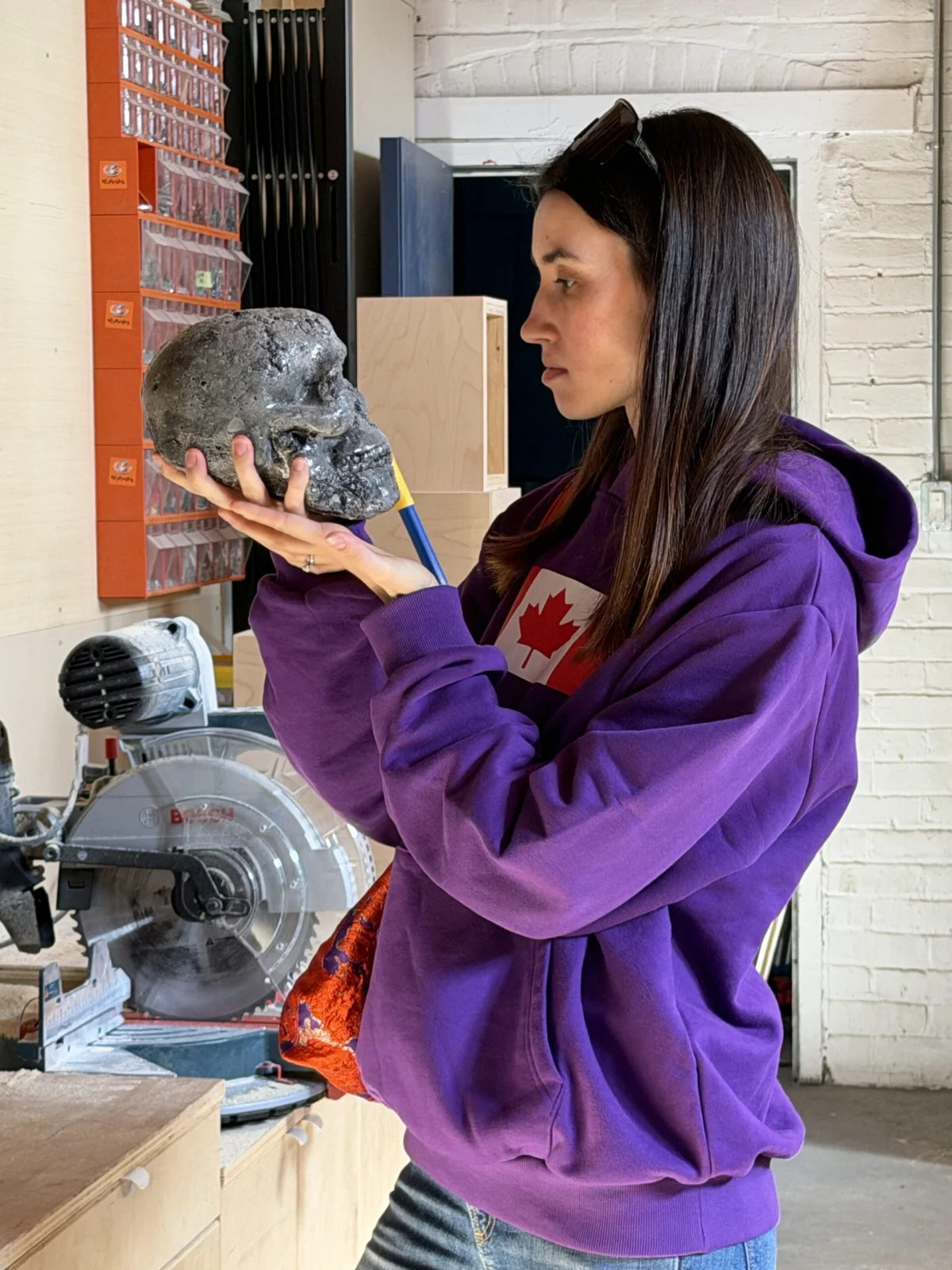
 Brat Star’s debut album, Southern Ontario Gothic, finds its scale in small, familiar things: Toronto streets, Hokas, an Aritzia sweater, movie characters and the textures of a Canadian city. The Montreal-born singer-songwriter gives those references private mythology through a delivery that sits between speaking and singing, dry on the surface and more tender underneath. In a conversation with friend Clairo, held in Toronto three days before the album’s release, she describes a method built from close attention, humor and a fondness for twinning.
THURSDAY 11 AM OCTOBER 22, 2026 TORONTO
Making Toronto her own
 Toronto is the album’s emotional center, but Brat Star didn’t grow up there. Raised in Montreal, she remembers the city as the big place people around her dismissed. That made it intriguing: if Toronto was large enough to inspire suspicion, it seemed large enough to inspire songs, too.
In the 2010s, The Weeknd’s first project gave her a new sense of excitement about being Canadian. Drake’s Views then showed her how a musician could build a world around a city. Brat Star wanted to try her own version, one grounded in the specifics of her experience rather than a generic portrait of urban life. Her Toronto is recognizable through its everyday markers, and the title Southern Ontario Gothic gives those details a charged, almost cinematic frame.
Clairo sees a distinctive skill in the way Brat Star treats common objects as emotionally loaded material. She points to the song about Hokas as an example: the shoes were already part of daily life, but Brat Star’s attention made them newly legible. Clairo compares that knack for capturing a time and place with the work of Connie Converse, a folk singer-songwriter from the 1950s and ’60s whose lyrics join sharp humor to feeling.
Brat Star says the seriousness beneath her songs comes naturally. Humor took more practice. She describes herself as sensitive and earnest, and says she learned that a little distance can make intense feelings funny. That space doesn’t drain the emotion from a song; it can make the emotion easier to approach. In her hands, a deadpan line can carry affection, frustration and self-awareness at once.
References as a songwriting method
For Brat Star, art is a form of translation. She is drawn to the original source behind an idea and to the layers that gather around it over time. Movies, books and songs rarely exist in isolation: a familiar story gets retold, borrowed from and reshaped. She points to Clueless as a reworking of Jane Austen and 10 Things I Hate About You as a story with Shakespearean roots. That chain of influence is part of the pleasure.
When she writes, she collects the associations that rise around a subject. A lyric can begin with one reference and accumulate “texture and sediment” from what it recalls. That approach explains why her work can move from a recognizable brand or film character into a more personal register. The reference is an entry point; the song’s meaning develops through the writer’s particular set of connections.
Clairo calls Brat Star a conceptual artist whose preferred medium happens to be music. She admires her care with language and the way her lines can be funny without losing their weight. Brat Star, meanwhile, wonders aloud whether she is a musician or a conceptual artist, but the distinction seems less important than the attention she brings to both words and their surroundings.
Clairo explains that her own songwriting often starts with universal experiences such as love, hardship or the fear that someone might leave. She has been listening to old folk and Appalachian music and New Orleans jazz, where performers often reinterpret songs and add their own perspective. Connie Converse’s writing appeals to her because it can hold difficult, familiar feelings with an unexpected comic edge. Brat Star’s songs work in a related way: the humor sharpens the feeling instead of dismissing it.
Being present, with a little optimism
Brat Star calls herself “anti-hauntology”: she doesn’t want to stay absorbed in nostalgia, but to make work that belongs to the present. Clairo admits she is drawn to the past, and says Brat Star’s focus on current details can feel like a push toward what comes next. References to Aritzia and Hokas may seem too ordinary to romanticize, yet that’s precisely what gives them force. They reflect the objects and habits that shape contemporary life.
Shania Twain is another reference point for Brat Star. She admires Twain’s attention to her audience and the lift in songs such as “Man! I Feel Like A Woman!” To Brat Star, that encouragement is a distinctly Virgo quality: a desire to offer people hope. Clairo agrees that upbeat music can be unfairly dismissed as corny, even though a direct invitation to get outside, stay present and trust that things can be okay has real emotional value.
Brat Star’s idea of optimism isn’t blind cheer. She hears an unspoken darkness in Twain’s energy, and thinks that the positive message feels earned because it coexists with something harder. Difficult truths can help people grow, she says, but a songwriter doesn’t always need to prove that the lesson has been learned. Clairo recognizes that impulse in herself, too: sometimes it’s enough to be glad a hard period has passed instead of narrating the arrival at a new understanding.
 This mix of acuity and ease helps explain the album’s tonal range. Brat Star can examine an everyday object with near-microscopic focus, then allow a joke or a flash of bitterness to keep the song from becoming overly solemn. The result doesn’t flatten life into either sweetness or struggle. Both can be present in the same song, as they are in the conversation around Twain’s earned optimism.
A step-by-step record, with comfort first
Brat Star’s Virgo tendencies show up in the way she describes her workflow: she set out to write a debut album, then began with the first song, “David Fincher.” She builds a record like a house, laying down a foundation and adding arrangements gradually until the structure reaches its roof. The process is deliberate, but it leaves room for discovery as the songs take shape.
The visual identity came later. Brat Star says her Oakley sunglasses were a practical purchase at an airport while she was touring with Luke Fenton and Dylan James Hancock. She wanted a comfortable pair, and function set the direction for the look. She describes the result as carrying “No Frills energy,” a distinctly Canadian sensibility. The project’s visuals grew from the clothes she was already wearing, with a heightened version of her own style built around them.
That choice gives the album’s image a useful closeness to its songs. The styling wasn’t imposed as a polished concept before the music existed; it emerged from ordinary needs and personal habits. Comfort, convenience and a pair of sunglasses bought in transit became part of the visual language. Brat Star lets function lead and allows the attitude to follow.
“Aritzia Sweater” and the case for bitterness
 Clairo singles out “Aritzia Sweater” as a song that takes a familiar brand and gives it an unusually pointed role. Aritzia is well known to many listeners, she says, but people rarely make it the subject of a song. Brat Star wrote the track by letting herself say something intentionally outrageous, then checked with her husband repeatedly to see whether it was too much. It made the album.
The song’s speaker is bitter, jealous and convinced of her own authenticity. Brat Star says she was interested in the petty logic of insisting that everyone else is fake because she wears Aritzia, while others wear Gucci or an obscure vintage piece. The joke lands because the brand isn’t treated as a neutral name drop; it becomes evidence in a deliberately absurd argument about taste and identity.
Brat Star credits Drake with making room for emotions such as pettiness, jealousy and bitterness. She sees those feelings as valuable songwriting material, especially when set beside more reflective or tender songs. Clairo agrees that the contrast matters: sweet introspection needs its sharper counterpart. A record with room for both can feel more human than one committed to a single emotional register.
Taylor Swift is another touchstone for that balance. Brat Star names “Blank Space” as a classic reference and says discovering Swift and the song four years earlier changed her understanding of why listeners connected so intensely with her work. The track’s playful self-awareness fits Brat Star’s interest in mixing a pointed character voice with an underlying emotional truth.
 Clairo’s praise leaves Brat Star visibly overwhelmed; Brat Star returns the affection by insisting she’s excited for Clairo’s album, too. The exchange circles back to their shared joke about twinning. Here, that impulse reads as more than matching dinner orders: it’s a wish to connect, to find a shared language while still bringing a different perspective to the conversation.
The album’s promise lies in that combination. Brat Star starts with the details people recognize, then follows their associations into humor, tenderness or an unflattering little truth. Toronto gives the songs a home, while film, fashion and pop references give them a wider vocabulary. Her method is meticulous, her delivery deliberately dry, and her takeaway is to let ordinary things carry the weight we already place on them.