XERF Radiofrequency Treatment: A Personal Take on Jawline Tightening
XERF pairs radiofrequency heat with surface cooling. One editor shares how the treatment felt and what he noticed immediately, with longer-term results still to come.
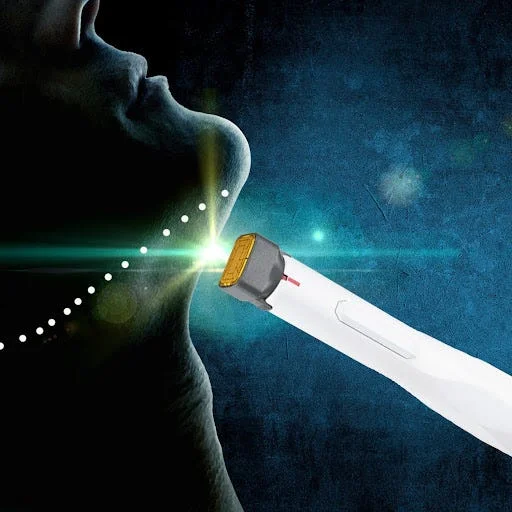
This column first appeared in the Men’s Health email newsletter. The Optimized Man is a biweekly series from our editorial director as he tries the latest health and wellness innovations. Sign up here to get the next one.
Why I tried another jawline treatment
My interest in XERF began with a familiar irritation: over time, the edge of my jaw had softened. In my early 40s, the lower half of my face started to look rounder, and I became more aware of how much that changed my appearance. I’d read Men’s Health contributor Garrett Munce’s guide to jawline preservation, which describes the strong, sharply defined jawlines common in superhero imagery. My own was heading in a different direction.
There are ordinary reasons a face can look different with age. Skin produces less collagen, facial fat can thin in some areas and shift in others, and the bone beneath the skin can change subtly. Together, those shifts can make the lower face look less defined. That’s a description of how faces change, not a requirement to chase a particular shape. Still, I wanted to see whether a treatment could make my own jawline look a little firmer. For background on changes in skin over time, see this guide to skincare for men over 40.
Over five years, I tried Sofwave, Morpheus8 and Ultherapy with dermatologists. These treatments work in different ways, but each uses energy or needles to heat tissue beneath the skin. The premise is that this stimulation can encourage collagen production over the weeks and months that follow. Sofwave and Ultherapy use ultrasound; Morpheus8 combines tiny needles with radiofrequency energy. I found the treatments worthwhile, and I think they helped me maintain some definition. The drawback was the wait: I wanted to know sooner whether anything had changed.
What makes XERF different
Brian Underwood, grooming and beauty editor for Men’s Health and Women’s Health, suggested I look into XERF, a newer treatment from Korea. The name is pronounced “zerf.” It isn’t a laser: the device uses radiofrequency energy to heat tissue below the skin, while bursts of cooling help limit heat at the surface.
The treatment head is a wand that passes energy into the skin. The heat is intended to contract some existing collagen, which may create a visible tightening effect during or shortly after treatment. The longer process is collagen remodeling: the treatment is intended to prompt new collagen production over the following weeks and months. Those are two different timelines, and an immediate change doesn’t tell you what the longer-term result will be.
The evidence on XERF is early. Published research is largely limited to animal studies, though it supports the basic concept that heat can contract and remodel collagen. That leaves plenty to learn about how people respond and how results develop over time. The treatment mechanism sounds familiar alongside other energy-based options; the combination of two radio frequencies and surface cooling is the feature that sets XERF apart in this account.
The appointment and the immediate effect
David Kim, MD, founder of Soho Dermatology in New York City, explained the device while I lay back with gel on my face. As he moved the wand across my jaw and toward my cheeks, he described how the two radio frequencies are used to heat tissue at different depths. The aim is to address both an immediate contraction effect and slower collagen remodeling. Cooling pulses protect the skin’s surface from becoming too hot.
My experience was milder than I expected. Even at the highest intensity, the sensation felt like a warm washcloth being pressed against my face, rather than a painful procedure. That’s my experience in one appointment; how a treatment feels can vary from person to person, and it doesn’t establish what results someone else should expect.
About halfway through, Dr. Kim showed me a mirror. The treated side appeared more lifted to me, with a cleaner-looking jawline. My skin was only slightly redder than usual. After he treated the other side, I left feeling as if my face looked refreshed, without the redness, swelling or surgical recovery I associate with a facelift. The mirror gave me a snapshot of that day, though; it can’t answer how the result will hold or change in the months ahead.
A result that let me move on
After the appointment, I went back to work, spent time with my kids and saw friends. I stopped checking my jawline and thought about lunch instead. That shift in attention mattered to me as much as the first impression in the mirror. I don’t want to spend every day evaluating my face, and I know that worries about appearance can take up more space than they deserve.
My read is that XERF offered a comfortable appointment and an immediate change I could see, while its longer-term effects remain something to watch. The early research means it’s sensible to keep the distinction clear between the treatment’s intended mechanism and what’s established about results. For me, the appeal was a less intense-feeling session and a visible lift right after treatment. The more useful measure will be whether that impression persists as the slower collagen process unfolds.
We all have features we notice more than we’d like. If a treatment makes someone feel more at ease with their appearance, that experience can count, too. I’m glad I tried XERF; now I’ll see how my jawline looks over time and let the rest of life take up more of my attention.

Richard Dorment is the editorial director of Men’s Health and Women’s Health.