Talia Byre Brings Stripes, Merino Knits and Brogues to Topshop
Talia Byre’s 17-piece Topshop collection turns her British, uniform-inspired style into everyday knits, denim and shoes.
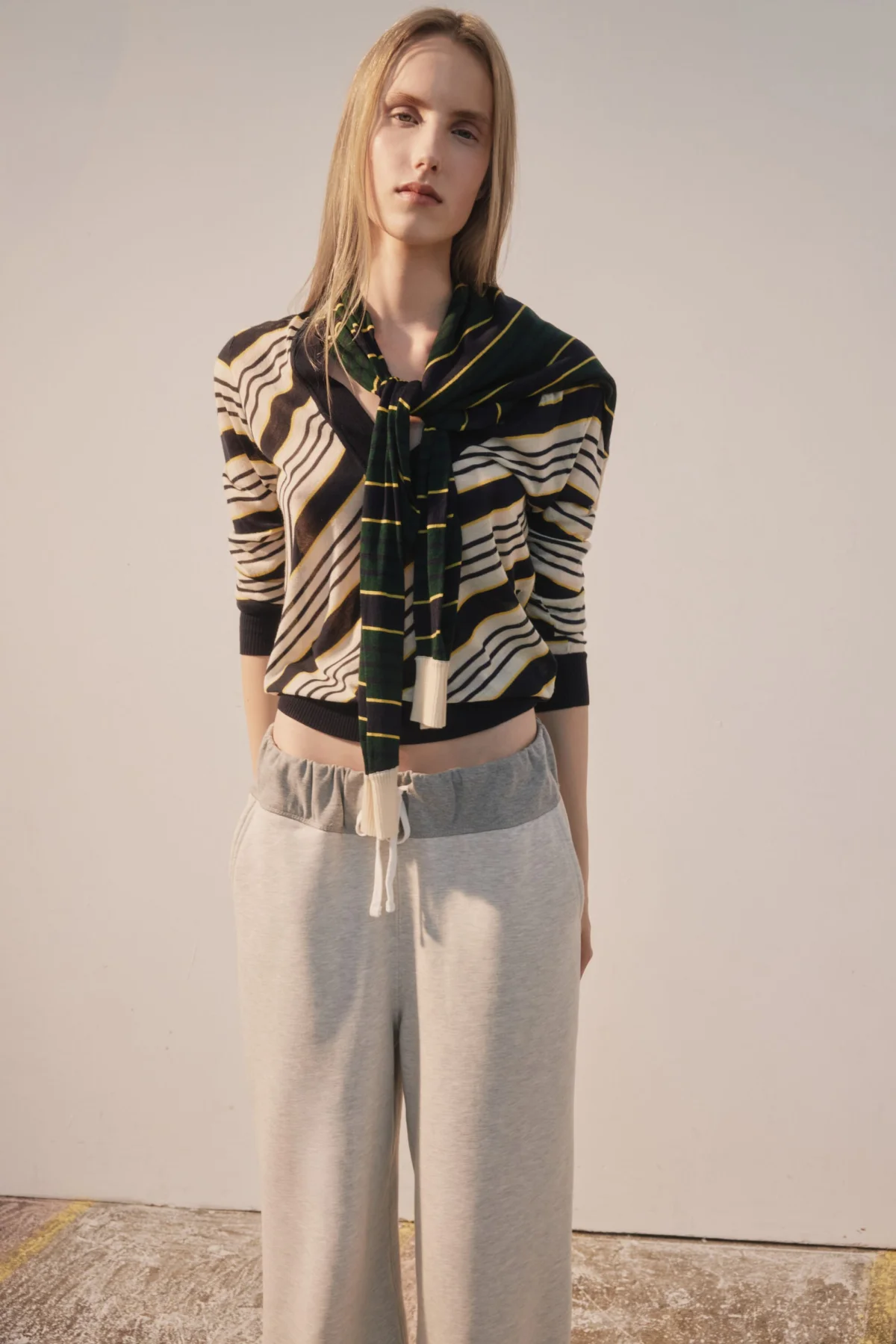
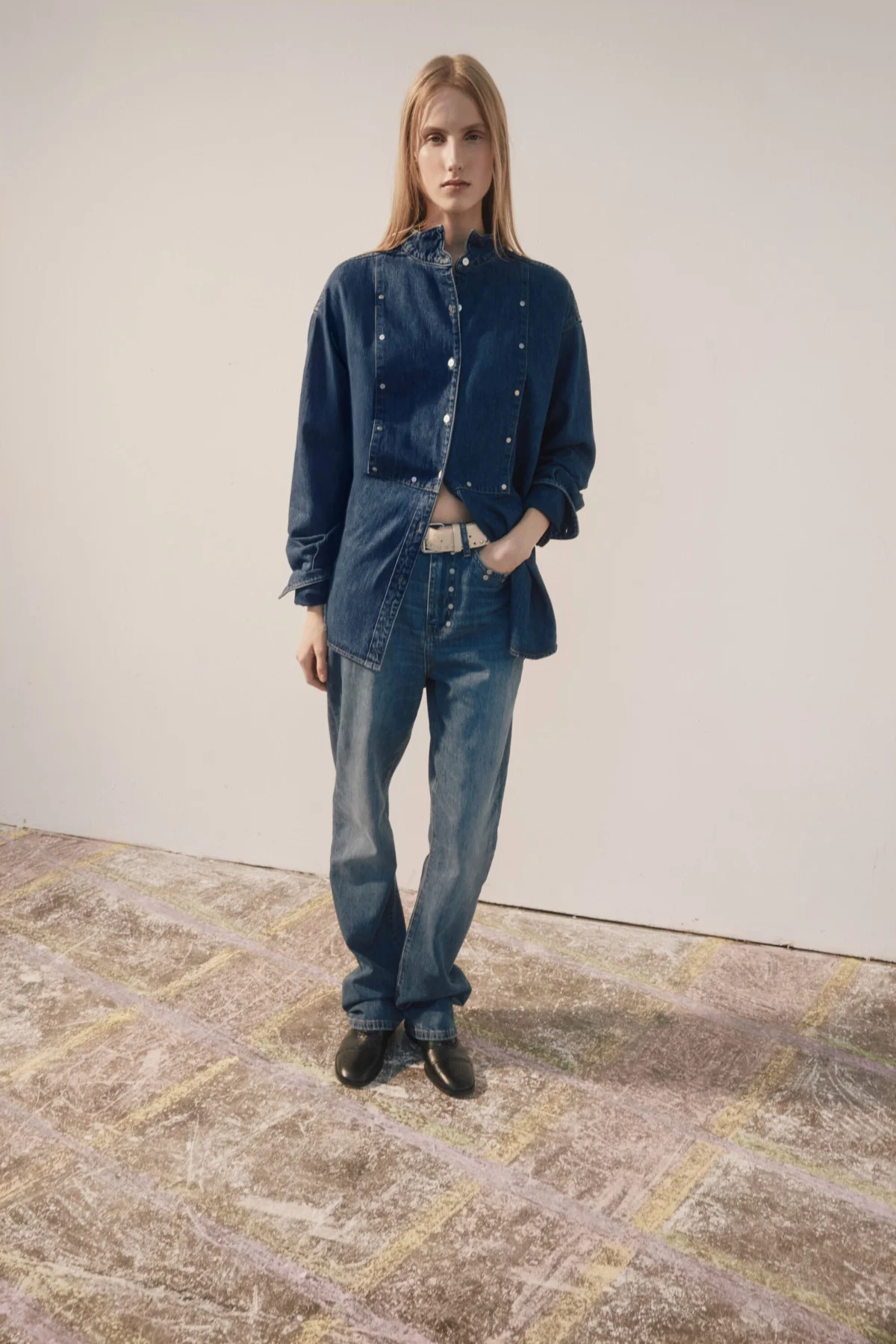
Talia Byre’s Topshop collection takes the designer’s school-uniform references out of the studio and onto the high street. The 17 pieces bring together signature stripes, compact silhouettes and British preppy styling, with superfine merino knitwear, jeans, shoes and a small white leather jacket among the offerings. Byre’s measure of success is distinctly everyday: she wants to step off a bus and spot someone wearing the clothes.
The collaboration follows Byre’s Spring 2027 show and marks the label’s first large product partnership. It also reconnects the designer with the shop where her interest in fashion began. Growing up in Warrington, she spent time looking through Topshop’s rails, where a distinctive find could feel like a discovery. Some early purchases, including ballet pumps reminiscent of Amy Winehouse’s, are still at her parents’ house.
The collection is available through Topshop, a brand Byre and her team already knew through its history of designer collaborations. Her team still owns pieces from Christopher Kane’s collections, she says, and she sees this project as joining that lineage. For Byre, the appeal is both personal and practical: the partnership makes room for categories and techniques that the label hasn’t yet explored at its current scale.
A uniform with room for personal style
Byre describes the starting point as a wardrobe that feels like the Talia Byre studio girl’s uniform. She watches how people on her team wear pieces from each season, mixing them into outfits with items such as tracksuit bottoms or a shrunken top. That observation shaped a collection meant to feel lived in, rather than like a complete look that has to be worn exactly as presented.
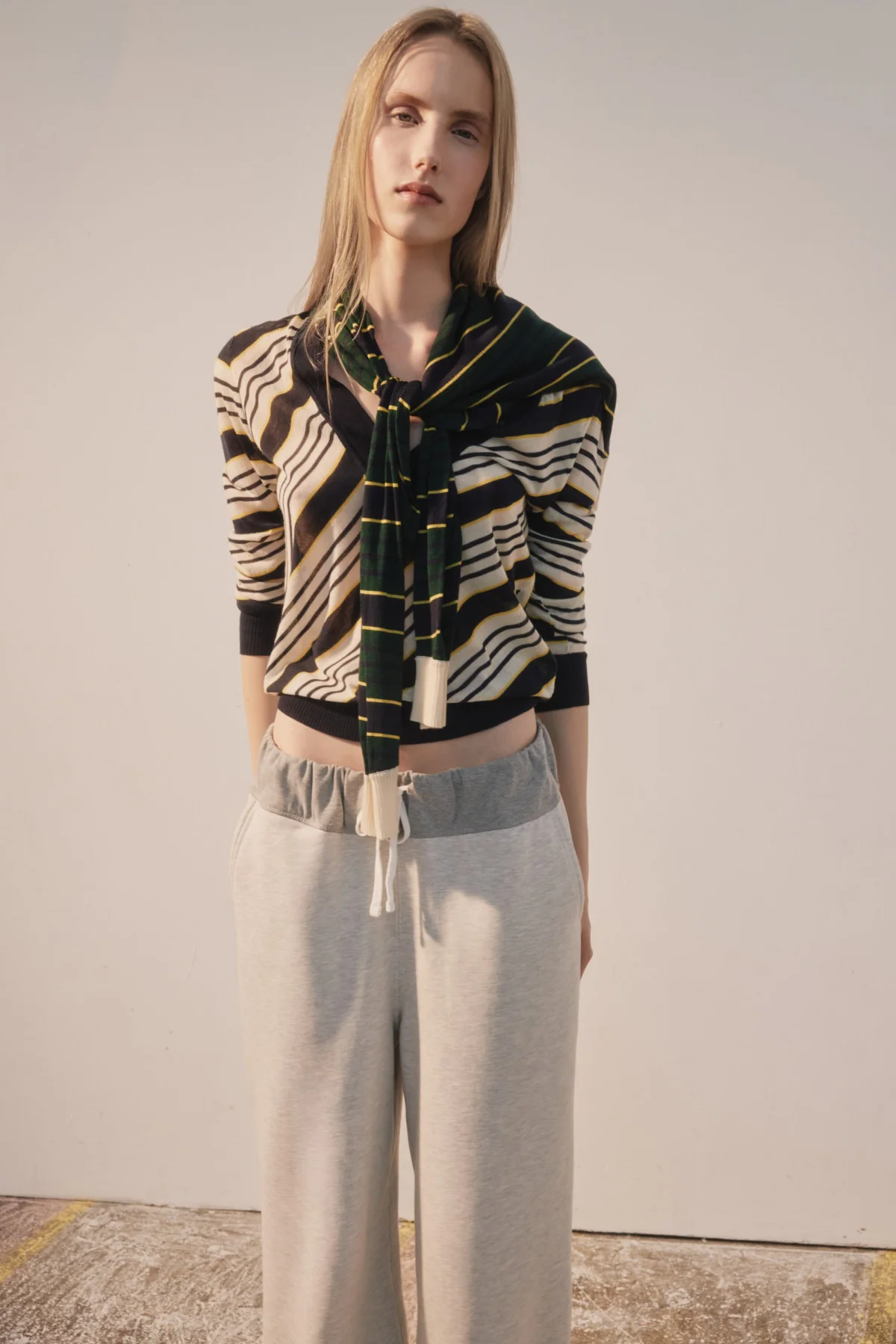
Britishness and school uniforms have long interested Byre, and the collaboration gives those references a fresh setting. The styling is preppy, but the proportions are deliberately a little off-kilter: familiar uniform ideas meet small, close-fitting shapes and unexpected details. Stripes and knitwear make the connection to her label especially clear. The result looks like a wardrobe with a point of view, while leaving space for wearers to put the pieces into their own routines.
The knitwear also shows what a larger product project can make possible. Byre points to knitting on the bias as a technically specific process, and the collection uses superfine merino wool. That combination of construction and fibre gives the knits a more considered place in the lineup than a basic uniform staple. A little knit dress is one of her own favourites, while the studio team has its own preferred pieces.
New categories, familiar references
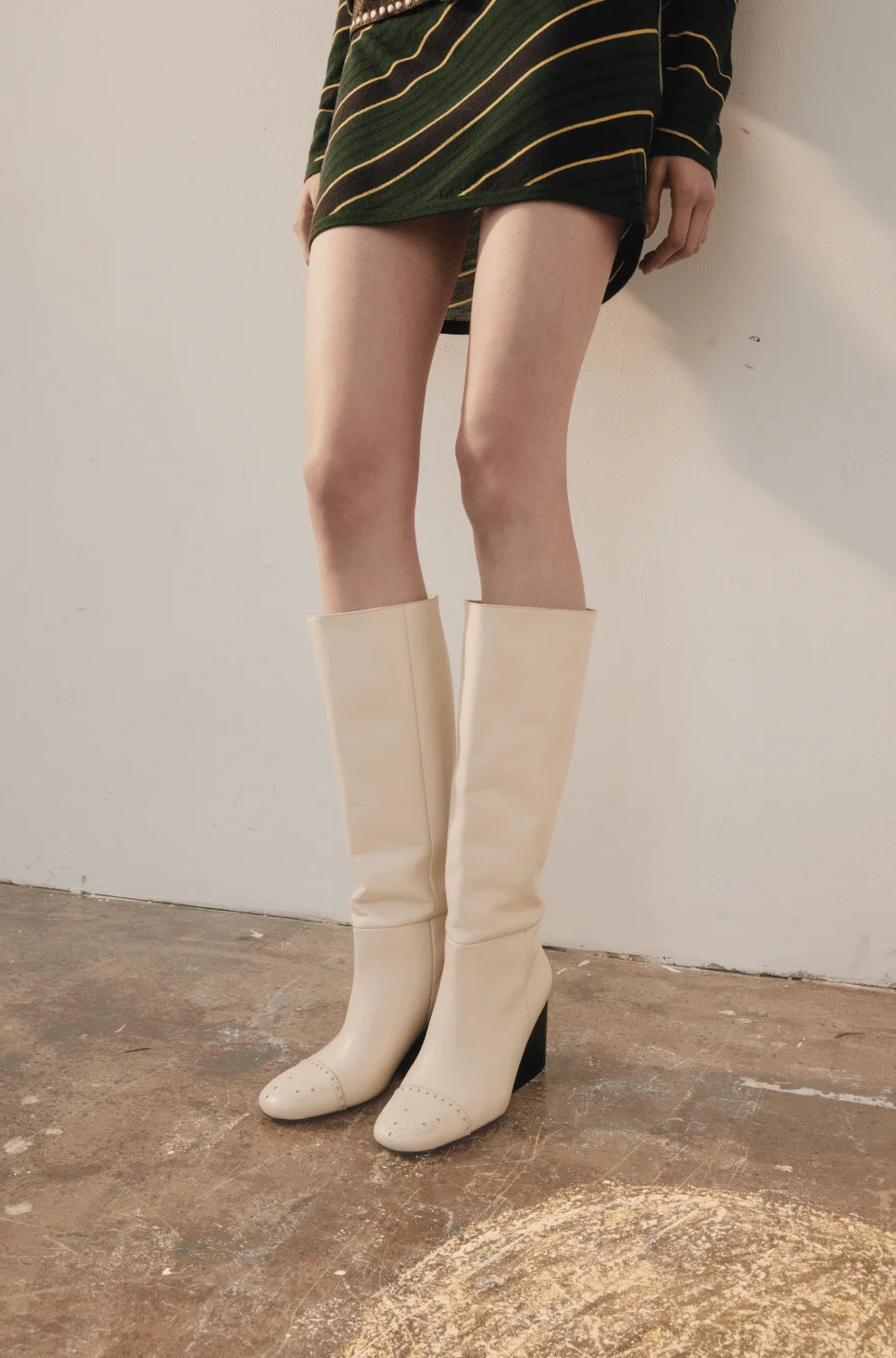
Jeans and shoes are new territory for the label, making the collaboration an opportunity to extend its visual language beyond knitwear. The footwear starts with an idea from Byre’s first show: the team found vintage brogues and cut away their backs. That original gesture informs the new white shoes, while the wider selection adds a boot and a heel intended for a different kind of wearer.
The boot carries brogue detailing across the toe, paired with a wedge that narrows to a point underneath. Byre says she wore the shoes around Paris and found them wearable. The design’s appeal lies in how it keeps a recognisable brogue reference while changing the shape and proportions. The pieces offer different ways into the same idea, rather than making every shoe a variation of one uniform silhouette.
Other details come from vintage finds. A T-shirt began with a charity-shop piece that, by coincidence, had belonged to the school of the label’s art director. The original had grosgrain tape running down the side, a detail the team chose to retain. That discovery gives the shirt a direct link to the collection’s schoolwear references, while its specific finish keeps it from reading as generic uniform dressing.
Fabric and composition were part of the team’s attention to detail: the jersey is 100% cotton, and the leather is made in Spain. Those specifics give a clearer picture of the materials behind the pieces, alongside the superfine merino used in the knits. The collection’s range—from jersey and denim to wool and leather—also makes its everyday ambition tangible. It is designed to enter an existing wardrobe through separate pieces, not require a head-to-toe change of style.
Made to leave the studio
Byre’s favourite piece may be the little shrunken white leather jacket; she says she has already taken it from the rail. The knitwear, particularly the knit dress, is another stand-out for her. These choices point to the collection’s balance: distinctive proportions and materials create the interest, while familiar wardrobe categories make the pieces easier to bring into everyday dressing.
That everyday setting matters to Byre. When her design and atelier manager, Ellie, sent her a message about seeing someone wear one of the label’s crewnecks on a bus, Byre was delighted. Clothes worn in public and folded into someone’s ordinary day represent a wider reach for the label than its niche fashion audience alone. Her hope is to see the collection on the bus or tube, where the clothes meet the same kind of real-life styling that inspired the studio uniform in the first place.
The next step is already in view: Byre says the label has a zine coming in February and is planning something special to accompany it. For now, the Topshop collection carries the energy of the Spring 2027 show into new product categories and a broader setting. The strongest pieces keep the label’s stripes, shrunken shapes and British references intact, while giving wearers plenty of room to make them their own.