Paul Schrader on Mortality, Independent Filmmaking and the Making of Taxi Driver
At 80, Paul Schrader is still finding ways to make films, back emerging talent and revisit the solitary characters at the heart of his work.
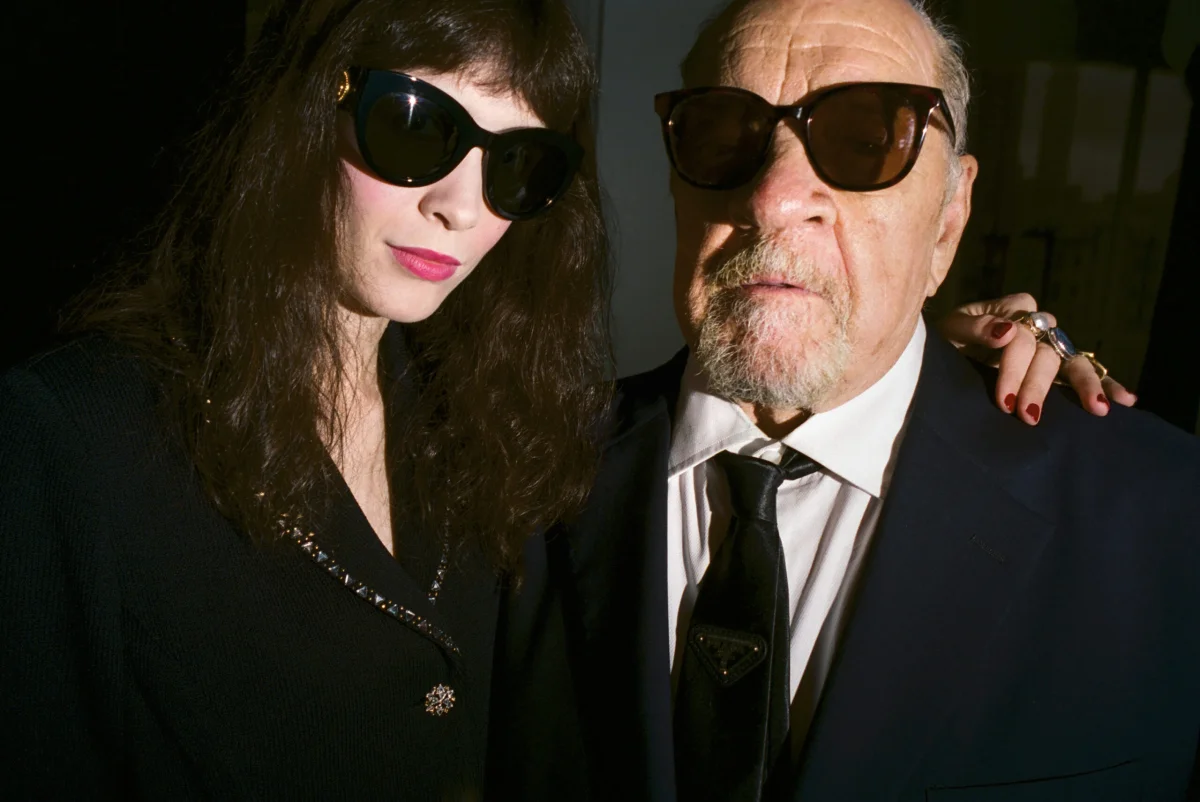
Paul Schrader has spent a career writing men who build private worlds, then watch something unsettle them. At 80, he’s still working, still looking for financing and still returning to that inward-facing character. His latest film, The Basics of Philosophy, takes up difficult subject matter, including a professor who is a pedophile. The film had its world premiere at Venice and its US premiere at The Downtown Festival, where Schrader spoke with the festival’s founder, filmmaker Rebekah Sherman-Myntti.
The conversation ranged from aging and mortality to the accident of meeting critic Pauline Kael, the lonely circumstances that gave rise to Taxi Driver, and why Schrader keeps giving younger crew members room to take on new responsibilities. His account is practical, often funny, and clear-eyed about the conditions behind a long career: keep making work that can be financed, and don’t wait for permission to begin.
Schrader’s first route into filmmaking was through the very thing his church prohibited. Movies were forbidden where he grew up, which only sharpened his interest. Then Ingmar Bergman arrived, bringing films that felt intellectually and spiritually substantial to a young man studying divinity. The first Bergman film he saw was The Seventh Seal. In Grand Rapids, Michigan, one serious cinema showed at most one quality film a week, so the hunt for movies became part of the education.
College brought an unlikely venue for Bergman. A nearby softcore theater wasn’t attracting much business, and its owner decided to devote a month to the director’s films. Schrader was already reading everything he could find about cinema history, and he wanted access to the films he was learning about. That meant New York. He took a couple of classes at Columbia largely to see movies, and there he found the person who would become his mentor.

A chance meeting with Pauline Kael
Schrader was at a Columbia bar reading I Lost It at the Movies and making notes when another patron asked whether he liked the book. The man offered to introduce him to Kael, then arranged dinner for the following night. Schrader had seen relatively few films by her standards, but he arrived with plenty of opinions. The two argued late into the evening, spiritedly and over drinks.
When it was time to leave, Kael decided Schrader was too drunk to take a cab and told him to sleep on her sofa. The next morning, she made him breakfast and gave him a routine: write every two weeks and send along every review. He did. That exchange became a model for the access and encouragement he now extends to younger filmmakers, even if he describes his own motives with a laugh and a dose of economic candor.
When Schrader gives someone a chance to move into a more demanding role on set, he says, the person often works intensely to demonstrate they can handle it. They may also bring something fresh precisely because they haven’t done that job dozens of times before. He compares the effect to a musician tackling a score for the first time: unfamiliarity can prompt original choices. His instinct is to find people poised to grow, then give them a reason to show what they can do.
It’s a useful description of a career built through resourcefulness, not simply a story of generosity. Schrader says he began writing on spec and continues to do so, a path he believes younger writers can learn from. No one needs to grant advance permission to start a script. But the work still needs judgment: write something with a plausible route to a buyer, he says, rather than spending time without a clear sense of what the project might become. He couldn’t have persuaded anyone to pay him to write First Reformed before he had written it.
The lonely image behind Taxi Driver
Before Taxi Driver, Schrader was out of work and adrift. Around 1969 or 1970, after leaving his wife for another woman, he was thrown out of that relationship too. He had no income. His job delivering Chicken Delight ended after he ate too much of the food he was meant to deliver. He was drinking, sleeping in his car and spending nights among the old movie palaces on Santa Monica Boulevard, where people could sleep in the balconies.
At 26, he developed severe stomach pain and went to a hospital, where doctors found a bleeding ulcer. In the emergency room, he realized he may not have spoken to another person for three weeks. He was also experiencing suicidal thoughts and violent fantasies. The image that came to him there was of a large yellow taxi, coffin-like, moving through the city’s sewers with a young man trapped inside. The driver was surrounded by people and yet profoundly alone.
Schrader recognized himself in that picture and decided to write about the character before he became him. He wrote two drafts in two weeks. At first, the script was a form of therapy, with no plan to show it to anyone. Later, as his prospects changed and he became a sought-after screenwriter, he felt pressure to make the most of the opening. The industry’s attention, he reasoned, could shift to someone else the following year; he needed to write and make connections while his moment lasted.

That character didn’t remain confined to one film. Schrader says he has returned to a similar figure many times: a man living alone, given to self-examination, keeping a journal and wearing a kind of mask made from his profession. The job might be taxi driver, drug dealer, card player or gardener. It gives the character a structure and a way to hide; then an event disrupts the enclosed life he has built.
Schrader first wrote this kind of man because he saw himself in him. Later, he understood the character in broader terms: an existential hero, less concerned with the usual question of how to live than with whether to live at all. Schrader saw that figure in European cinema and American literature, but felt it had not yet taken hold in American film. Before writing the script, he reread Jean-Paul Sartre’s Nausea and Albert Camus’s The Stranger, both first-person stories centered on existential protagonists. His read is that American audiences were ready for that character, helping explain the film’s success.
Schrader describes hustling as a matter of understanding what another person needs, rather than simply promoting yourself. The distinction fits his approach to both opportunity and financing: make the value of the work legible to the person who can help it happen. He says he’s always working in some form. When there’s nothing immediately on his schedule, he tends to find something to do.
Making films on a smaller scale
That drive is only part of why Schrader continues to make films. He says filmmaking gets harder with age, while fewer people are willing to invest in him. His answer has been to keep budgets manageable. For roughly the past 20 years, he says, a typical production has cost around $5 million or $6 million. He can hire recognizable actors at scale, which helps investors see a potential path to recouping their money.
When pitching a project, Schrader says he can offer investors three things: a film they’ll be proud to mention socially, the chance to attend a red carpet in Venice, Berlin or Cannes, and a reasonable prospect of getting their money back. He’s careful not to promise a fortune. In his framing, people who’ve earned money in other businesses may find it interesting to support a film for a change. Some do.
His description of success is similarly grounded. The ability to keep working is the goal, and it has never been easy. He calls film financing a scavenger’s game: filmmakers assemble money from separate sources, then keep going. Recognition is part of the picture too. About once a day, someone recognizes him or says they love his work, which still catches him off guard because he isn’t an actor.
For an artist at 80, mortality is both a subject and a market problem. Schrader would ideally make a film in the vein of Vittorio De Sica’s Umberto D, a classic centered on aging, but he doubts that kind of story would draw enough paying moviegoers now. So he looks for a younger metaphor through which to explore mortality. That calculation doesn’t erase the subject; it changes how he approaches it.
Asked about his own death, Schrader says he isn’t afraid of dying, though he does fear prolonged pain and agony. He has long imagined that he might live to 82. Aging, meanwhile, has crept up on him. He feels 40 until he has to climb a flight of stairs. Mentally, he considers himself as sharp as ever: generating ideas, watching films and forming opinions with the same confidence he had when younger.
Provocation, festivals and audience trust
Schrader thinks audiences today are more readily offended than they once were, and that subjects people might previously have shrugged off can now provoke a stronger response. That tension is relevant to The Basics of Philosophy, a film about uncomfortable material that includes a pedophile as a character. Schrader said he was surprised the film wasn’t accepted by Telluride, Toronto or New York, festivals where he had shown work before. He was told that subject matter was a factor in the decisions at Telluride and Toronto.
Sherman-Myntti argued for a distinction between depicting a character’s behavior and endorsing it. Her interest, she said, is in films that take on difficult subjects and trust viewers to engage with complexity. That was part of why she wanted the film at The Downtown Festival, where it played to a sold-out, engaged crowd after its Venice premiere.
For Schrader, the timing also mattered: the festival overlapped with New York. What he appreciated was its appetite for fresh approaches and different ways of presenting work. The exchange offers a small but telling account of how festivals can serve filmmakers. They can provide a room for challenging films, and a chance for audiences to think through what they’ve seen without being told what to think.

What keeps the work moving
Schrader doesn’t make a grand distinction between workaholism and passion. He gets restless when he isn’t working and says he is never entirely off the job; an empty stretch tends to become an occasion to invent something. Still, he knows that persistence needs calculation. The challenge is to keep finding a project worth making, and a workable route from a script to a screen.
At his age, the subjects he wants to explore and the subjects a film can sell are not always the same. He keeps thinking about aging, but tries to reach it through a form that might interest a younger audience. He keeps working, but adapts the scale of the work to the investors he can attract. And he keeps giving new crew members room to grow because their fresh perspective may benefit the film as much as it benefits them.
What excites him now is simple: a good drink after sundown, the feeling that a film is going to work, and the particular pleasure of discovering that a series has six more episodes after a strong first one. He still likes to travel, though it’s more difficult than it used to be. When he was younger, a phone call could send him to the airport, sometimes arriving in Barcelona at midnight to find the city awake. He’d welcome another idea today, he says, but already has three scripts ready to shoot. For Schrader, that may be the clearest measure of a continuing career: the next idea is welcome, and the work is already waiting.
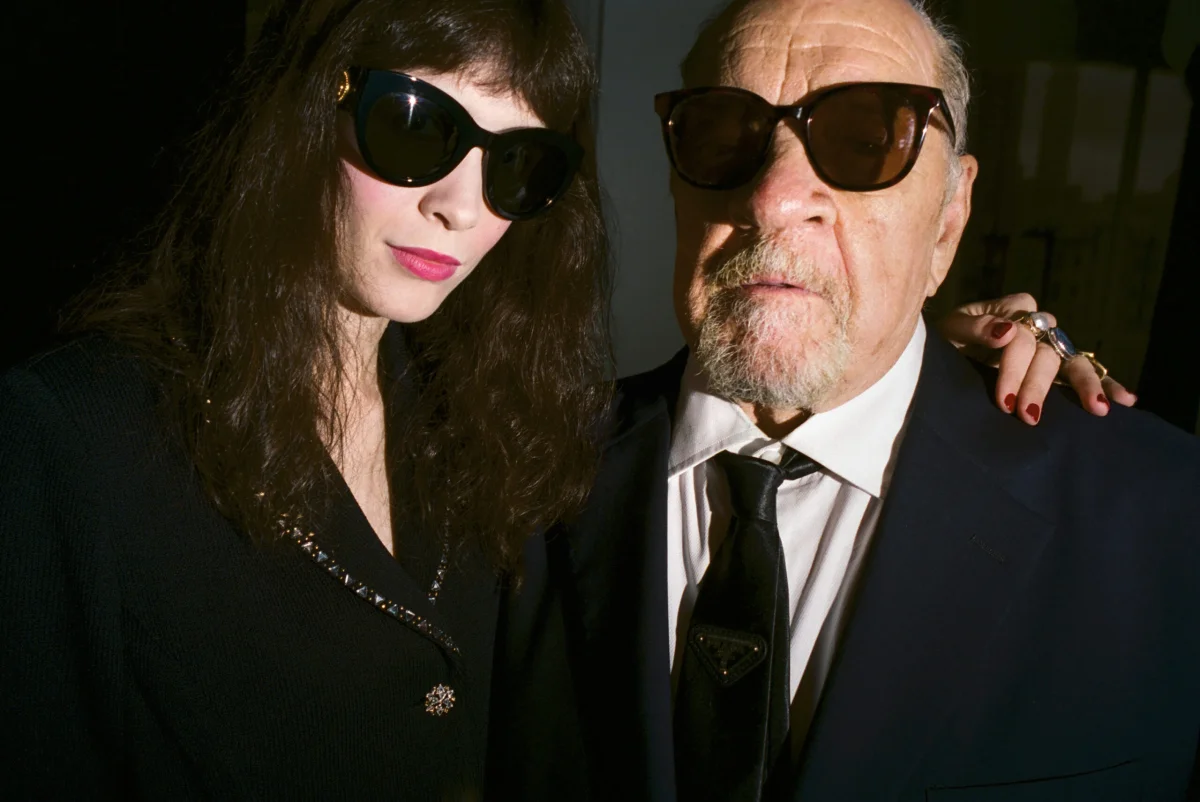
Paul Schrader and Rebekah Sherman-Mytti, photographed by Daniel Arnold.
The original interview appeared in Interview Magazine.