Linda Cardellini on Crystal Lake, Freaks and Geeks and Choosing Unpredictable Roles
From Freaks and Geeks to Crystal Lake, Cardellini reflects on career turns, tough auditions and the appeal of characters with room for contradiction.
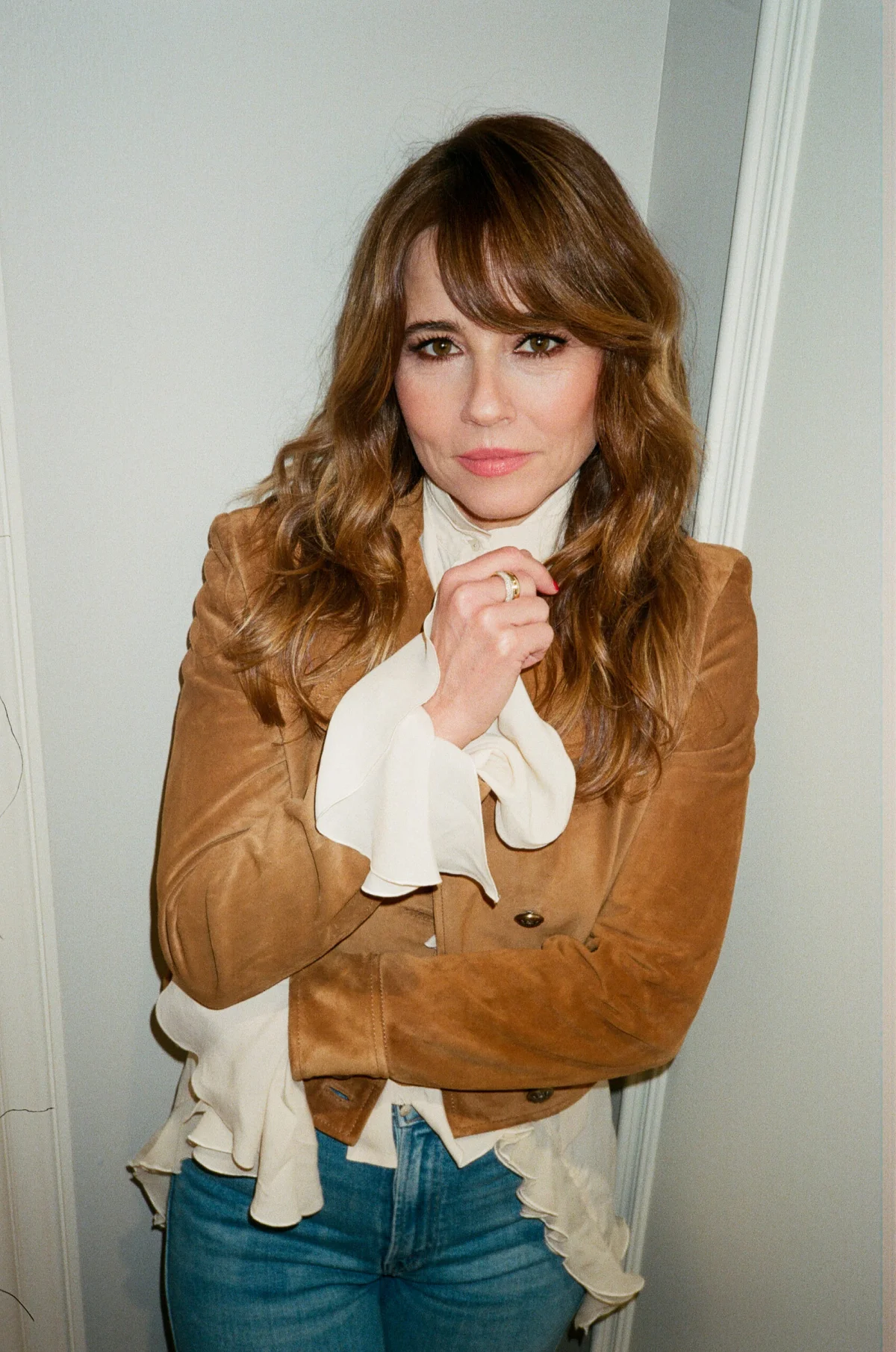

Linda Cardellini, photographed by Matt Weinberger.
Linda Cardellini has spent three decades making a case for the pleasure of a sharp left turn. She’s moved from the restless teen Lindsay Weir in Freaks and Geeks to a scheming sorority sister in Legally Blonde, then to Velma in Scooby-Doo, finding different registers for comedy and drama along the way. In Peacock’s Crystal Lake, a prequel to Friday the 13th, she takes on a character who is a lounge singer, a mother and a murderer.
That combination is part of the draw. Cardellini says the role gives her a chance to make something new from a character whose parts seem, at first, difficult to fit together. Her friend Bill Hader, who recently worked with her on a film he wrote and directed, calls it a role that “contains multitudes.” In their conversation, the pair look back at the early jobs, near misses and deliberate choices that shaped a career still moving between tones.
TUESDAY 3 PM OCTOBER 20, 2026 NEW YORK CITY
A start built job by job
Cardellini moved to Los Angeles because acting was what she wanted to do, though she didn’t arrive with a clear career plan. New York felt too far from her family. In Los Angeles, she looked for theatrical work and invited representatives to see her in plays. She also tried an open call she found on a telephone pole, hoping to work as an extra.
The job took her to a disused part of the Los Angeles County jail before dawn. The production was non-union, the set was cold, and there was no food. Cardellini says the film’s story involved young girls in jail being sold into prostitution. She left the experience with a firm sense that it wasn’t the kind of work she wanted to pursue, and went back to theatre auditions. She had an acting degree, but the next step still meant taking each opportunity as it came.
Hader asks whether she felt sure that acting would work out. Cardellini describes herself as driven rather than confident. She says she didn’t know she could make it, only that she couldn’t imagine choosing another path. Her mother’s encouragement became a lasting touchstone: there would be great writers and scientists, she told her daughter, so why couldn’t Cardellini be one of them? Cardellini says she now passes that thought along to her own daughter.
Even after years of steady work, she says, the sense of security can be fragile. An actor can wonder whether the next job will come, even while working consistently. Hader counters with evidence from the outside: Cardellini has continued to take on varied roles, and audiences have responded strongly to her performances. She says she feels grateful for the work, rather than pointing to one moment when she knew the career had settled into place.

The long road to Freaks and Geeks
Before Freaks and Geeks, Cardellini’s first acting job was on the Saturday morning show Bone Chillers. It lasted 13 episodes, but the paycheck mattered: until then, she had been scooping ice cream at college for $4 an hour. She went on to guest roles in sitcoms, where she enjoyed the energy of performing for a live audience.
Those early parts often cast her as someone’s plucky or sassy friend, with dark purple lipstick and pleather to match. One year before Freaks and Geeks, she auditioned repeatedly for a role and didn’t get it. By the time the next round of auditions came, she had opportunities on three shows. Each required a long process that could include multiple auditions and a final test. Cardellini chose Freaks and Geeks over the other two possibilities because she loved the material. The choice paid off creatively, though not immediately in the way a new actor might hope.
The show had a devoted audience among the cast and viewers who thought it was special, but it didn’t draw the ratings its network wanted. Its Friday-night slot was interrupted by baseball, and the series eventually disappeared. Cardellini remembers that decline as heartbreaking, though she and her colleagues weren’t entirely surprised by the way the audience numbers had fallen.
The show’s reputation grew later, including after its DVDs came out. At the time, though, being part of a beloved production didn’t automatically bring the cast a rush of new work. Cardellini says she and the others went back to auditions and kept trying. She was occasionally recognized for a different role: on Boy Meets World, she played someone who split up the central couple. Viewers still remember the character as a homewrecker.
That persistence also meant learning how personal the audition process could feel. Cardellini recalls auditioning as many as five times before hearing that she had been close to getting a part. Hader recognizes the particular strain of having to be open and vulnerable in a performance while building enough resilience to face repeated rejection. He remembers a casting director asking him whether he knew he was auditioning for a comedy. He had thought his performance was funny; his misstep, he says, was miming a scene in which his character got drunk instead of bringing water as a prop. He had come from improv classes, where miming was familiar.

Making each role a change of shape
Cardellini says variety wasn’t an accidental byproduct of her career. She paid attention to whether a new part felt too much like something she had already done. She admired actors who disappeared into characters, and wanted each role to feel distinct from the last. After playing Lindsay Weir, taking on a murderer in Legally Blonde felt like a welcome change of direction.
Scooby-Doo offered a different kind of shift. Cardellini had grown up loving the cartoon, so the chance to appear in a film version felt unlikely and exciting. Velma’s broad comedy was part of the appeal, as was her intelligence. The role let Cardellini play into the spirit of a childhood favorite while giving the character her own clear point of view.
Hader remembers being struck by how fully Cardellini inhabited the parts in both films. He says it took him several minutes to recognize her in Legally Blonde, and that she brought the same sense of character to Scooby-Doo. He also points to her dramatic work, including Brokeback Mountain, as a choice that crossed the boundaries audiences sometimes place around performers.
That question of being typecast is familiar to Hader from his years on SNL. He says he was often associated with comedy and had to seek out dramatic material he cared about, then convince directors he could take it on. Cardellini says she usually thought of herself as dramatic, so comic casting could surprise her. She enjoys the space between the two modes, where humour and seriousness can sit together rather than take turns.
For her, that mixture reflects the way people behave. The funniest people she knows can also be serious; a character doesn’t have to stay in one emotional lane. She names Freaks and Geeks, Dead to Me and DTF [St. Louis] as projects that move between comedy and drama. That tonal overlap is part of what she looks for when a script gives her a chance to shift an audience’s understanding of a character.

Finding the surprise in the writing
Cardellini says she auditioned for DTF [St. Louis] and fought for the role because she loved the writing by Steve Conrad. The character’s story changes shape as it unfolds: the audience first understands her one way, then learns something different. Cardellini hadn’t played a character like her before, which made the part especially compelling.
Hader calls the performance brave, and Cardellini credits the character’s journey and Conrad’s writing. Her willingness to audition for a role after an established career also gives their discussion a useful wrinkle. She remembers auditioning for Brokeback Mountain and The Founder, the latter requiring her to sing alongside Michael Keaton in the film. Singing in the audition made the process nerve-racking.
Hader describes Cardellini as fearless on set, saying she commits to choices that surprise him. She doesn’t present herself that way; her emphasis is on the writing and on having a chance to play a character she hasn’t encountered before. The contrast between those perspectives fits the conversation’s larger picture of her work: an actor who makes bold turns feel grounded because she starts with the person on the page.

Crystal Lake’s many sides
In Crystal Lake, Cardellini brings together roles that would be striking on their own: lounge singer, mother and murderer. She says the challenge is to make all of them believable within one person and to carry the audience through that character’s journey. The part asks her to do things viewers haven’t seen from her before, which is exactly the kind of creative change she says she enjoys.
Hader had heard Cardellini talk about the project before it arrived on screen. He jokes that it has a family resemblance to the children’s film he was preparing to promote, The Cat in the Hat. Cardellini asks whether he’ll wear a hat for that press tour; he says he has been told to get a haircut so he looks human. The joke turns to Crystal Lake when Hader recalls seeing children watch it and react to its unsettling tone. Cardellini agrees that it’s a little disturbing.
The reaction at home has been just as vivid. Cardellini says her father stayed up through the night watching the series. Afterward, he asked whether he should watch all the Friday the 13th films. Hader says his children have also been asking where they can find those films after seeing Crystal Lake. For both families, the series has become an entry point to a wider story world.
That response suits a project built around a familiar title but a new performance challenge. Cardellini isn’t simply repeating an established screen persona: she’s working with a character whose identities create tension, and whose journey has to make that tension legible. Her career has often turned on that kind of shift, from a teen drama to broad comedy, from the familiar image of Velma to darker material. Crystal Lake brings those instincts into sharper, stranger territory.
Hader’s own film with Cardellini gives him another view of her range. During editing, he says, he found himself thinking, “I didn’t know she could do that.” He also shares a test audience comment: one viewer loved the film but hated seeing Cardellini cry. It’s a small sign of how strongly audiences connect with her, and of the emotional credibility she brings to a role.
For Cardellini, the connective thread isn’t a single genre or a fixed screen image. It’s the chance to find a new angle in the material and to trust that a character can hold more than one thing at once. With Crystal Lake, that means making singer, mother and murderer part of the same performance—and letting viewers follow where that combination leads.