Salon No-Shows: Five Ways to Protect Your Appointment Book
Combine client tracking, reminders, clear cancellation terms and deposits to reduce missed appointments and keep salon schedules more reliable.
Missed appointments leave empty time in a salon’s schedule, and reminders alone won’t solve every cause. A more reliable approach combines five measures: track when and why clients miss bookings, automate reminders, set a clear no-show policy, cover late cancellations and rescheduling, and ask for a deposit or card details when clients book.
Each step addresses a different point where an appointment can fall through. Phorest data reports 49% fewer no-shows for appointments booked online than for those made by phone or in the salon. Salons that send SMS reminders see 38% fewer no-shows, while requiring a deposit at booking is associated with up to 69% fewer. These figures offer useful context, but your own results are best measured against your salon’s starting rate.
Start with the pattern behind missed appointments
A client might forget a booking, face a last-minute change of plans, struggle to reschedule, or feel little commitment to an appointment made far in advance. The right response depends on the cause, so begin by recording when appointments are missed, which clients are involved and whether a pattern develops.
Calculate a baseline no-show rate with this formula:
No-show rate = (number of no-shows ÷ total appointments booked) × 100
If your salon booked 400 appointments last month and 20 clients didn’t arrive, the no-show rate was 5%. To estimate the value of that lost time, multiply the 20 missed appointments by your average service value. The result won’t capture every effect on the day’s schedule, but it gives you a practical measure to track as you make changes.
Look through your client management information for patterns across appointment days and times, repeat no-shows, team members’ columns and booking lead time. For example, check whether clients who book further ahead miss appointments more often, or whether missed visits cluster in particular time slots.
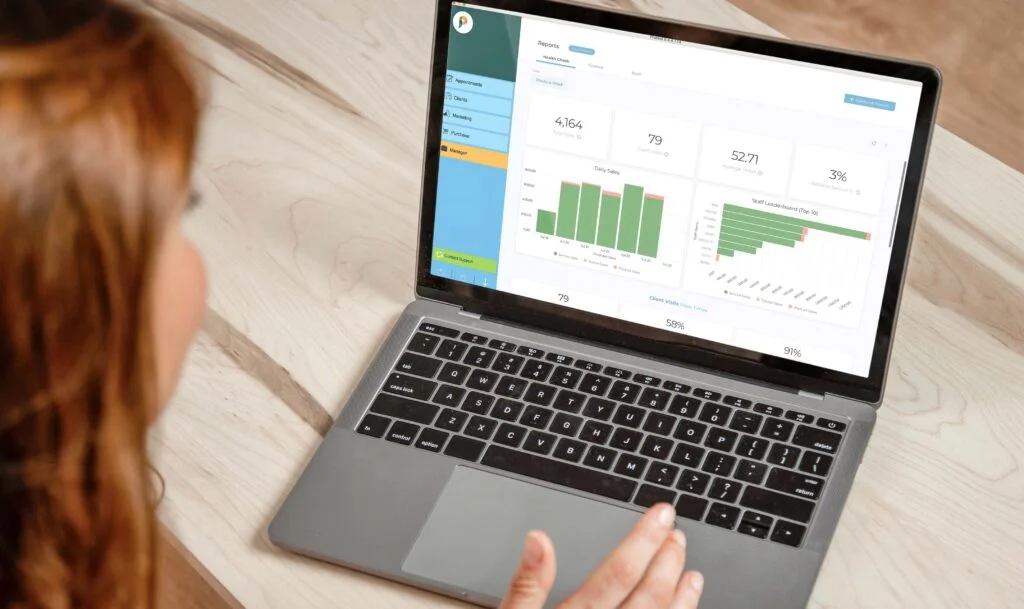
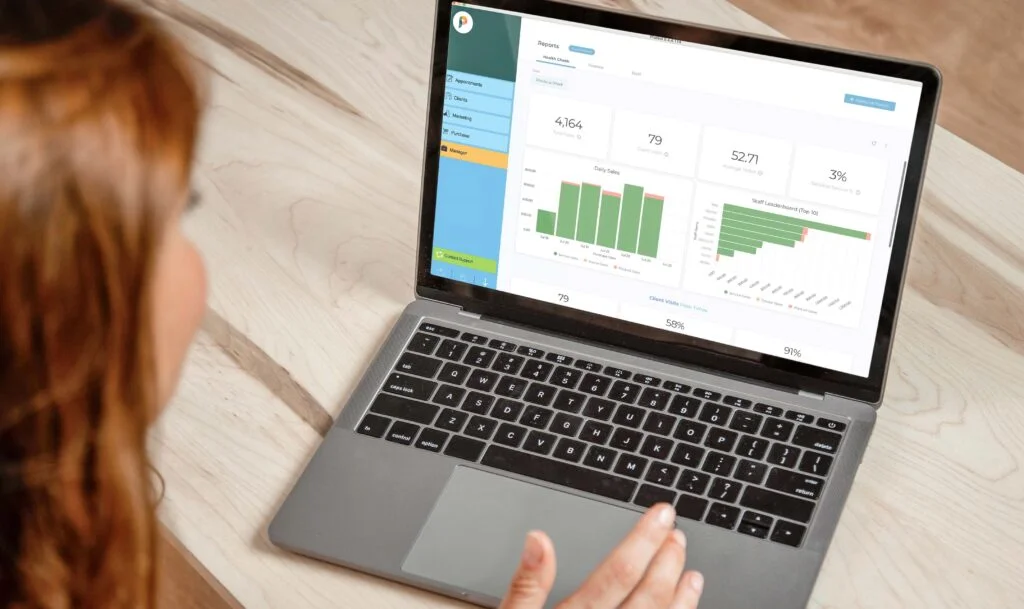
Phorest’s reporting suite and client management tools let salons record relevant notes on client profiles and set alerts for clients with a history of missed appointments. That gives the team a chance to respond before another booking is made, including requiring a deposit or restricting online booking where appropriate.
Once you can see the pattern, you can choose a focused response: improve reminder timing, make it easier to reschedule, or review how the salon handles repeat no-shows. A monthly check of your rate can show whether those changes are helping.
Make reminders easy to act on
Forgetting is a common reason for missed appointments, particularly when a client booked weeks ahead. Automated messages are a straightforward way to reach every client without adding manual follow-up to the team’s workload. Phorest reports 38% fewer no-shows at salons that send SMS reminders, according to its automated SMS and email information.
A useful reminder sequence has three parts: confirmation when the client books, a reminder one or two days before the appointment, and a simple way to reply or reschedule. The confirmation should include the service, date and time, plus the salon’s no-show terms. The advance reminder gives a client who can’t attend time to tell you, leaving a better chance to offer the appointment to someone else.
Automated email and SMS reminders can send those messages at set times. They also give the salon a clear record that appointment details and policies were shared. A reminder won’t prevent every missed visit, but it removes a common reason and supports consistent communication.
For further guidance on writing appointment texts, see the Salon Owner’s Guidebook to SMS Marketing.
Set terms clients can understand before they book
A no-show policy should answer four questions: what counts as a no-show, what fee or other consequence applies, how the salon handles genuine emergencies, and when the client agrees to the terms. Put the information in plain language and make it visible before a booking is confirmed.
For instance, a salon might define a no-show as failing to arrive or contact the team before the appointment time. Consequences could be a percentage of the service price, the full price, or a limit on online booking after repeated missed visits. The salon can also decide which team members may waive a fee in specific circumstances.
Share the policy in booking confirmations and the terms for online booking. Salons can also post it on their social channels. Give the team a short, consistent explanation, so clients hear the same information whoever takes the booking. One example from the source is: “Just so you know, we hold your time especially for you, so if you can’t make it, we ask for at least 24 hours’ notice. Missed appointments are charged at 50% of the service.”
The notice period and fee in that example aren’t universal recommendations; each salon can set terms that fit its services and schedule. The useful principle is to explain the terms in advance, apply them consistently and leave room for discretion when a client faces a genuine emergency. Clients are more likely to understand a policy when it’s communicated professionally.

Close the gap around late cancellations
A no-show policy covers a client who doesn’t arrive or get in touch. A late cancellation policy covers someone who does contact the salon, but cancels inside the notice period, when there may be too little time to refill the appointment. Late rescheduling can create a similar problem: a client moves a booking at the last minute, sometimes to a much later date, leaving an unexpected gap.
These situations can look different on the schedule, but each can cost the salon appointment time. A late cancellation fee might be lower than a no-show fee because the client gave some warning. For rescheduling, a salon could set a cut-off time, charge a fee for changes inside that window, or require clients to call the salon to make a last-minute change.
Phorest’s Online Booking settings include a minimum cancellation notice period. Setting one can prevent clients from amending a booking online inside the chosen window. Whatever the salon selects, explain the terms at booking so clients know when a change may carry a fee.
Use deposits to add commitment at booking
Deposits ask clients to make a financial commitment when they reserve time. Phorest data shows online appointments have 49% fewer no-shows than bookings made by phone or in the salon; when clients pay a deposit at booking, the reported reduction reaches as much as 69%. These figures make deposits a strong option for salons looking to protect appointments that are harder to refill.
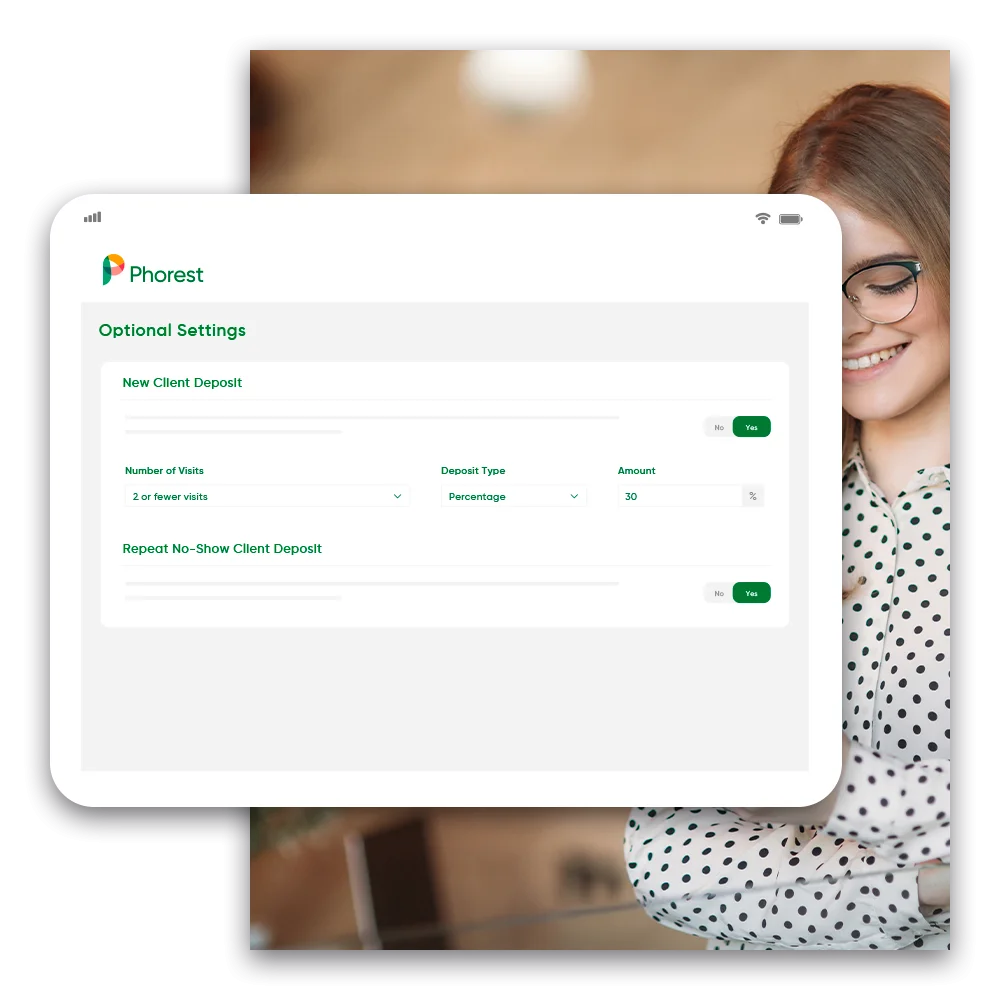
The deposit doesn’t have to be identical for every booking. A salon might request more from a new client or someone with a history of missed appointments, while asking a smaller amount from a regular client. It might also set deposits by service, with higher amounts for long or high-value appointments. Phorest describes options for custom online deposits.
Another option is to store card details securely for online bookings. Depending on the salon’s stated terms, saved card details can support a no-show fee or a charge for the full service price. Make sure clients see and accept the terms before booking. The point is to set expectations early and apply the same approach consistently.
Deposits can make the day’s schedule more predictable when they reduce missed visits. They also help salons prioritize the appointments where an empty slot would have the greatest effect. Track the no-show rate after introducing them to see which services or client groups respond.
Put the five measures into practice
Start with last month’s appointment records and calculate your baseline. Note repeat no-shows on client profiles, check that reminders are switched on and timed to give clients a chance to cancel, then write no-show and late cancellation terms in clear language. Add both policies to confirmations and online booking information, and brief the team on how to explain them.
Deposits can be introduced first for new clients or high-value services, then adjusted as the salon learns what works. For a late opening, keep a waitlist of clients who may welcome a short-notice appointment. Contact them promptly, then consider offering the slot to regulars, sharing it on social stories or opening it to walk-ins.
For a client who misses appointments repeatedly, record the history so the whole team can see it. The salon may ask for a deposit or full prepayment for future bookings, or remove online booking access. A friendly private conversation can also help: some clients may not realize how an empty appointment affects the team and other clients.
There’s no single no-show rate that suits every salon, so measure your own month by month as you introduce reminders, clearer terms and deposits. A steady combination gives clients more chances to remember, makes rescheduling expectations plain and gives the team a consistent way to protect appointment time.
Frequently asked questions
What’s the difference between a no-show and a late cancellation?
A no-show is when the client doesn’t arrive and hasn’t contacted the salon. A late cancellation happens when they get in touch inside the notice window, often too late for the salon to fill the appointment. Some salons charge less for a late cancellation because the client gave notice.
How much should a salon charge for a no-show?
There’s no single amount that fits every salon. Options include a flat fee, a percentage of the service price or the full price for repeat no-shows. State the amount at booking and apply it consistently, with room to use discretion in genuine emergencies.
Will a no-show fee lose clients?
Clients are more likely to accept a fee they agreed to before booking, especially when the team explains it clearly. Waiving a fee for a genuine emergency or a first missed appointment from a loyal client can help preserve goodwill while keeping the policy credible.
When should appointment reminders go out?
Send a confirmation when the client books, followed by a reminder one or two days before the appointment. Some salons may add a short same-day reminder for longer or higher-value services.
How can the salon fill a last-minute opening?
Contact a waitlist first, then consider regular clients who are due for a visit, social stories or walk-ins. A quick message gives interested clients a chance to take the opening.
What should the team do when a client repeatedly misses appointments?
Record the history on the client profile and discuss future booking terms privately. The salon might require a deposit or full prepayment, or remove the client’s access to online booking. A clear conversation can also explain the effect missed appointments have on the schedule.