Menstrual Blood Research Could Change How Endometriosis Is Diagnosed
Researchers are studying menstrual fluid as a source of clues about endometriosis and other conditions, while diagnostic tests still need rigorous validation.
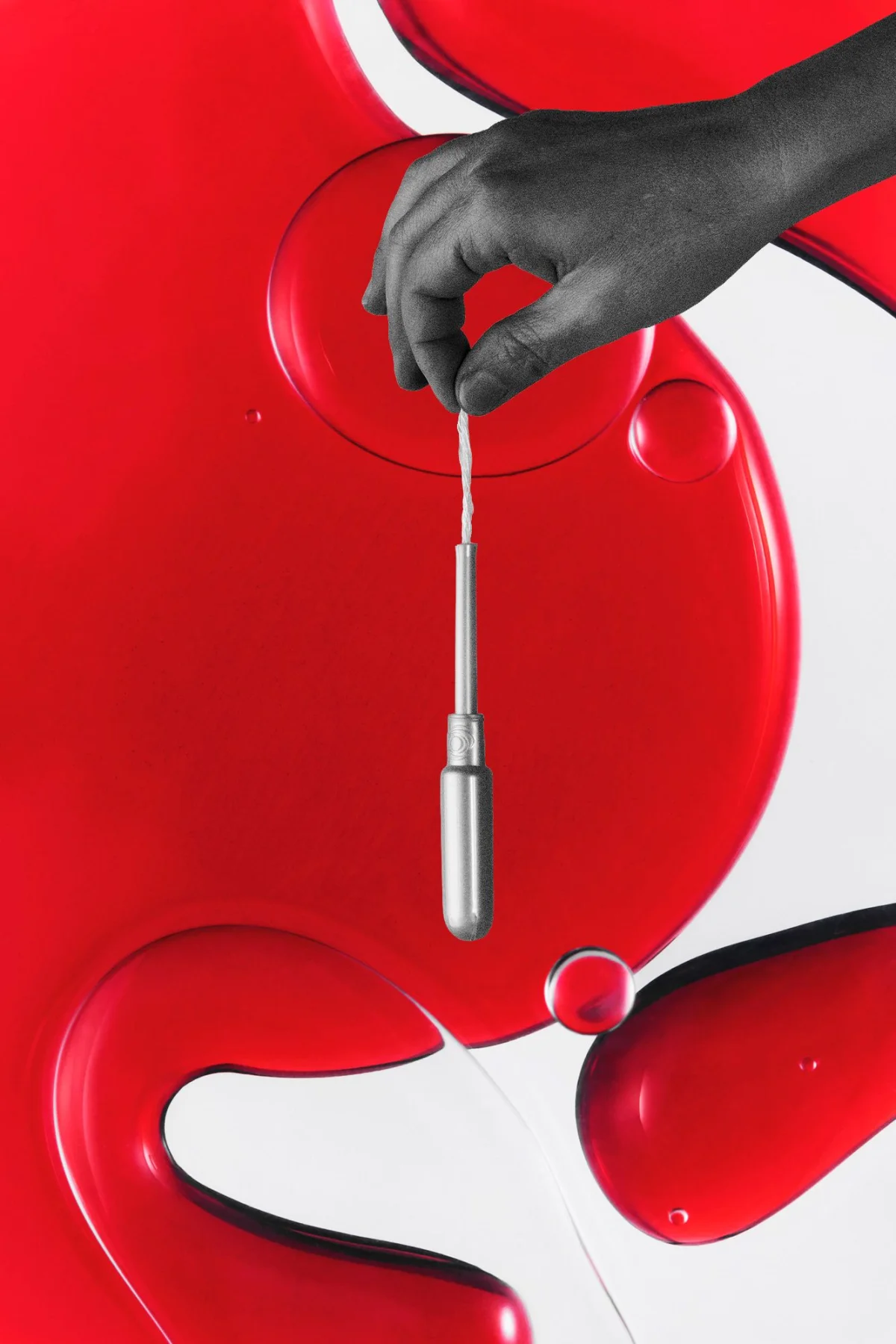
Menstrual fluid offers researchers a close look at the uterine lining, yet it has rarely been treated as a valuable source of health data. That’s beginning to change. Scientists and health technology companies are studying whether it could help reveal endometriosis and other conditions, though the diagnostic promise remains under investigation.
Known in medical research as effluent, menstrual fluid combines blood with shed uterine lining, vaginal and cervical secretions, and stem cells. Studies have identified more than 1,000 distinct proteins in it, including 385 not found in other blood. That mix may carry clues about the uterus and broader health, says Gemma Sharp, an epidemiology professor at the University of Exeter and director of the Menarche Menstruation Menopause and Mental Health Consortium. Sharp is part of a team building a menstrual fluid biobank while investigating heavy menstrual bleeding.
A research gap shaped by stigma and limited knowledge
Menstrual health has been overlooked in research, clinical practice, and public discussion, Sharp says. Women were often excluded from clinical trials before 1993, when the National Institute of Health’s Revitalization Act required their inclusion in future federally funded studies. As a result, researchers have had only a few decades to build knowledge about how diseases and treatments affect women.
Basic gaps in menstrual education have also surfaced among clinicians. Ridhi Tariyal, co-founder of Oakland-based health care and biotech company NextGen Jane, recalls pitching a menstrual sample project to a male oncologist. He assumed a single tampon would be worn for an entire period. Tariyal had to explain that people typically change tampons every few hours. The encounter, she says, showed how even an experienced doctor and scientist could lack practical knowledge about menstruation.
Social stigma has been another barrier. Christine Metz, head of medicinal biochemistry and a professor at the Feinstein Institute for Medical Research, says menstrual blood has long been treated as something people should avoid discussing. Popular culture has sometimes reinforced that discomfort, presenting periods as frightening or embarrassing. More recent depictions, including Broad City and the animated film Turning Red, have made menstruation more visible. Period products have expanded too, with underwear and cups among the options offered by brands such as The Period Company, Thinx, Looni, and Cora.
Greater visibility hasn’t erased stigma or the worldwide gaps in menstrual education and access to period products. Still, Metz sees an opening for research: scientists routinely study saliva, stool, and urine, she says, while menstrual fluid has received far less attention.
From forensic science to diagnostic research
One early route into menstrual blood research came from forensic science. In 2012, Donald Siegel, then a forensic scientist with New York City’s Office of the Chief Medical Examiner, and colleagues looked for ways to distinguish menstrual blood from other blood samples found at crime scenes. Their work established that the two have different protein profiles, including hundreds of proteins distinctive to menstrual fluid.
Researchers then began asking whether menstrual blood could reveal information that standard blood tests might capture less directly. One early focus was hemoglobin A1C, a measure used to monitor diabetes. People with diabetes commonly need testing twice a year, or four times if their condition is unstable or being actively managed. Testing generally involves a blood draw or a finger prick.
California-based Qvin, founded in 2014 by Dr. Sara Naseri and Soren Therkelsen, became the first company to commercialize menstrual blood testing. Its Q-pad has a removable strip that can be mailed in for analysis. In 2024, the pad received approval to measure and monitor hemoglobin A1C using menstrual blood for people with diabetes or prediabetes.
That product showed that menstrual fluid could be used for a diagnostic test, but it doesn’t necessarily make sample collection easier than a home finger prick. A more compelling possibility may be HPV testing. Current testing requires an in-person exam with a speculum, which some people find uncomfortable. Qvin has shifted its focus toward HPV, and its diagnostic pads for that use have received approval in Thailand.
Why a sample from the uterus may matter
The current research wave is focused largely on reproductive health. Menstrual fluid is a proxy for the endometrium, the inner lining of the uterus, says Irma Vlasac, a researcher at Dartmouth’s Geisel School of Medicine. It may therefore offer information about the uterus that standard blood samples don’t provide as directly. Some studies have also identified immune cells specific to the uterus.
That could be useful in research on endometriosis and reproductive tract cancers. Metz has studied inflammation for much of her career. In the mid-1990s, her research into how cells lining the endometrium and myometrium respond to inflammation led her to collect umbilical cords from a labor and delivery department. She later recognized menstrual fluid as a more direct sample for studying the uterus. Its biomarkers include urocortin 3, a protein involved in inflammation. A bank of these samples can help researchers investigate what’s happening in the uterus and assess possible diagnostic uses.
Kelly Lacob, co-founder and CEO of Xella Health, is also interested in that proximity to the source. Xella describes its service as precision health care and concierge care delivery. The private telehealth company uses lab results to recommend care plans for conditions including cancer, cardiovascular disease, and B12 deficiency, as well as for life stages such as trying to get pregnant or navigating perimenopause. Its standard membership costs $499 a year; a membership with more management of active conditions costs $949.
For now, Xella subscribers still need venous blood draws at a local lab such as Quest Diagnostics. The company plans to add menstrual fluid collection with a swab, alongside traditional blood testing. Lacob’s view is that samples taken closer to a particular body system may show relevant signals sooner and at higher concentrations. That idea is shared by researchers, though its value as a test still needs to be established.
Endometriosis is the main testing focus
Xella’s first menstrual fluid testing project will focus on endometriosis. The condition can involve painful periods, cramping, fatigue, and fertility challenges, and affects more than 6 million women in the United States. Diagnosis can take years. Laparoscopic surgery is currently the only medically accepted diagnostic method, and Metz says it detects about 70% of cases. A noninvasive test would address a significant gap, but there’s no evidence yet that a menstrual fluid test would diagnose endometriosis more accurately.
Metz and geneticist Peter Gregerson, a professor of molecular medicine, launched the ROSE study—Research Outsmarts Endometriosis—in 2013. The project is building a bank of menstrual specimens to learn more about the condition and improve diagnosis and treatment options. It has enrolled almost 4,000 participants and examined samples using several approaches. One of its most notable findings so far is the identification of cells in menstrual blood that express inflammatory biomarkers predictive of endometriosis.
Collection technique matters. The ROSE team found that silicon menstrual cups work best for its analysis, because absorbent products can damage tissues and cells and interfere with processing and measurements. The study needs about a teaspoon of fluid collected during peak flow, so a swab doesn’t provide enough. Earlier this year, the team received $850,000 from the National Institutes of Health.
Other groups are pursuing different collection methods. NextGen Jane is developing an at-home tampon-based test. The company has completed one study focused on endometriosis and is enrolling infertility patients in another. It has also begun enrolling people with diagnosed autoimmune and inflammatory disorders, including lupus and hidradenitis, for studies exploring the relationship with menstruation, which is itself an inflammatory process.
Researchers at Endogene.bio and Hospital Clinic in Barcelona are investigating menstrual samples for endometriosis testing. At ETH Zurich, a team has developed a diagnostic pad that remains in early clinical testing. The concept is to capture markers that could indicate cancer, endometriosis, or general inflammation. MIT’s Fairbairn Menstruation Science Fund, established last year, is devoted to menstrual blood research into endometriosis and other gynecological disorders, as well as chronic inflammatory diseases that more commonly affect women.
Researchers and companies see potential applications beyond endometriosis. Areas of interest include uterine fibroids, endometrial hyperplasia, adenomyosis, PMDD, lupus, cancers, and fertility. Lacob hopes menstrual fluid data could eventually provide information about the ovarian environment and the quality as well as quantity of eggs, an aspect of fertility care she sees as underserved.
Promising signals still need proof
Interest from health technology companies creates momentum, but it also raises a familiar question: are new diagnostic tools being offered before the evidence is strong enough? Xella uses an AI system to analyze bloodwork, flag patterns and out-of-range results, and suggest follow-up testing or medication. A physician reviews the recommendations. Metz is concerned that AI systems may have little menstrual blood research to draw on. Lacob says Xella’s system has been given clinical guidelines specific to women, published research, and resources on diagnostic gaps. It reports potential risks and its confidence in them, with clinical support for its recommendations.
The comparison with Theranos and its discredited blood testing is difficult to avoid when a company promises new forms of blood analysis. Researchers who have studied menstrual fluid for years remain interested in its potential, but they emphasize that promise doesn’t establish a test’s accuracy.
Menstrual fluid may also be useful beyond diagnostics. Each month, the uterus sheds and renews its lining. Tariyal describes this as a model for studying how the body responds to injury and repairs tissue without excessive scar formation. Understanding that cycle could inform research into natural tissue repair, but the topic has not received enough attention.
For diagnostic tests, Metz wants large clinical trials that show results can be reproduced and that a test is accurate and precise. She cautions that an unreliable product could harm confidence in research across women’s health. Sharp sees a potential advantage in combining the reach of technology companies with the rigor of clinical studies: large participant numbers can help research scale, while careful testing can establish whether results hold up. Metz says several approaches could succeed if they prove accurate and reproducible.
That proof requires sustained research funding. In 2020, 5% of global research and development funding went to women’s health. Only 1% of that funding was allocated to women-specific conditions, including menopause, endometriosis, contraception, and maternal health; a quarter of that 1% was restricted to fertility. Expanding the evidence base will take investment in independent research as well as in commercial products.
Menstrual fluid has already become a valuable research sample, but its future as a diagnostic tool depends on careful validation. The field’s next step is to pair the scale of new collection methods with studies strong enough to show what the samples can reliably reveal.