Riot Grrrl’s Global Legacy Takes Shape in Grrrl Germs Exhibition
Grrrl Germs traces four decades of Riot Grrrl through more than 150 flyers, showing how music, art and self-made communities travel across borders.

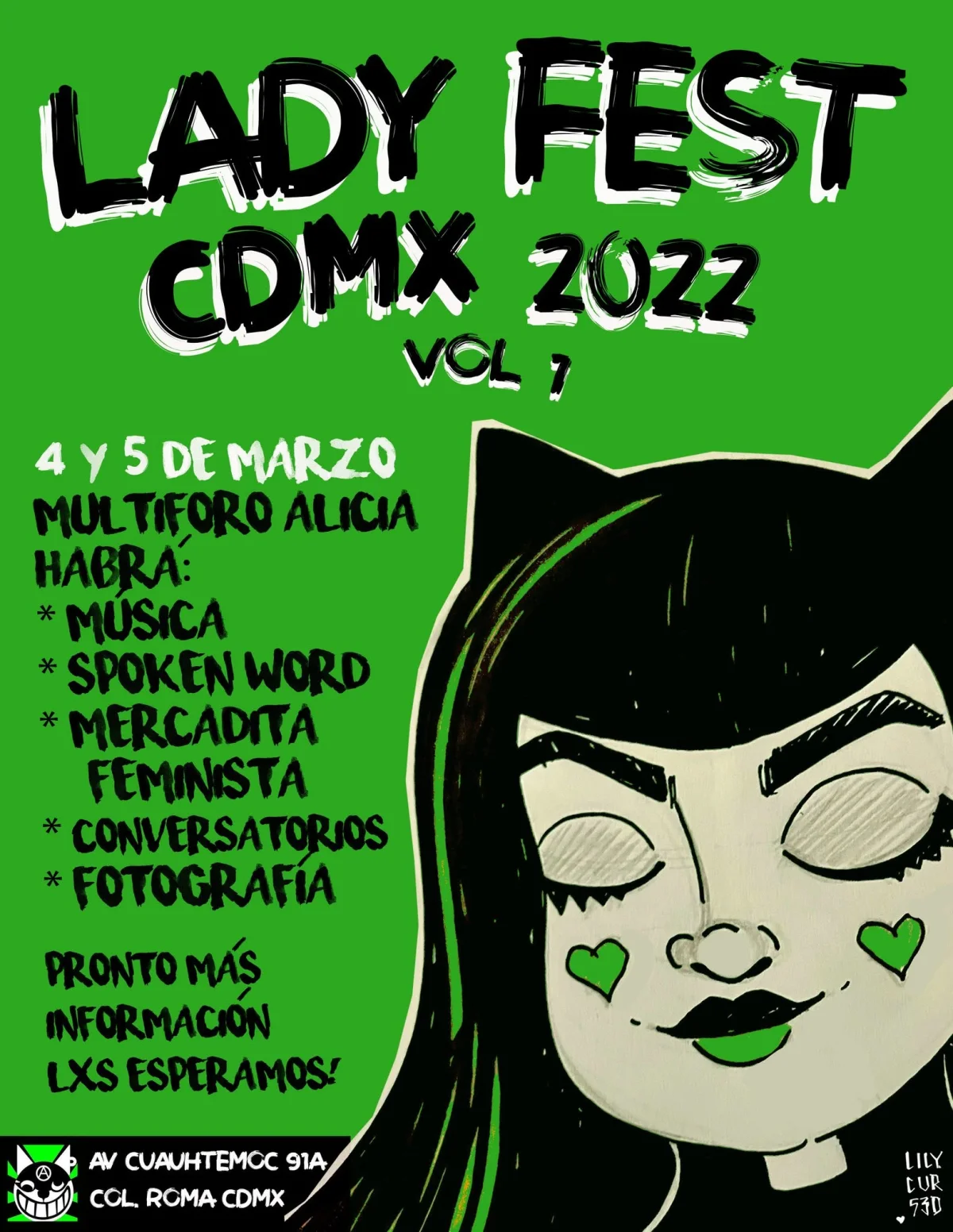
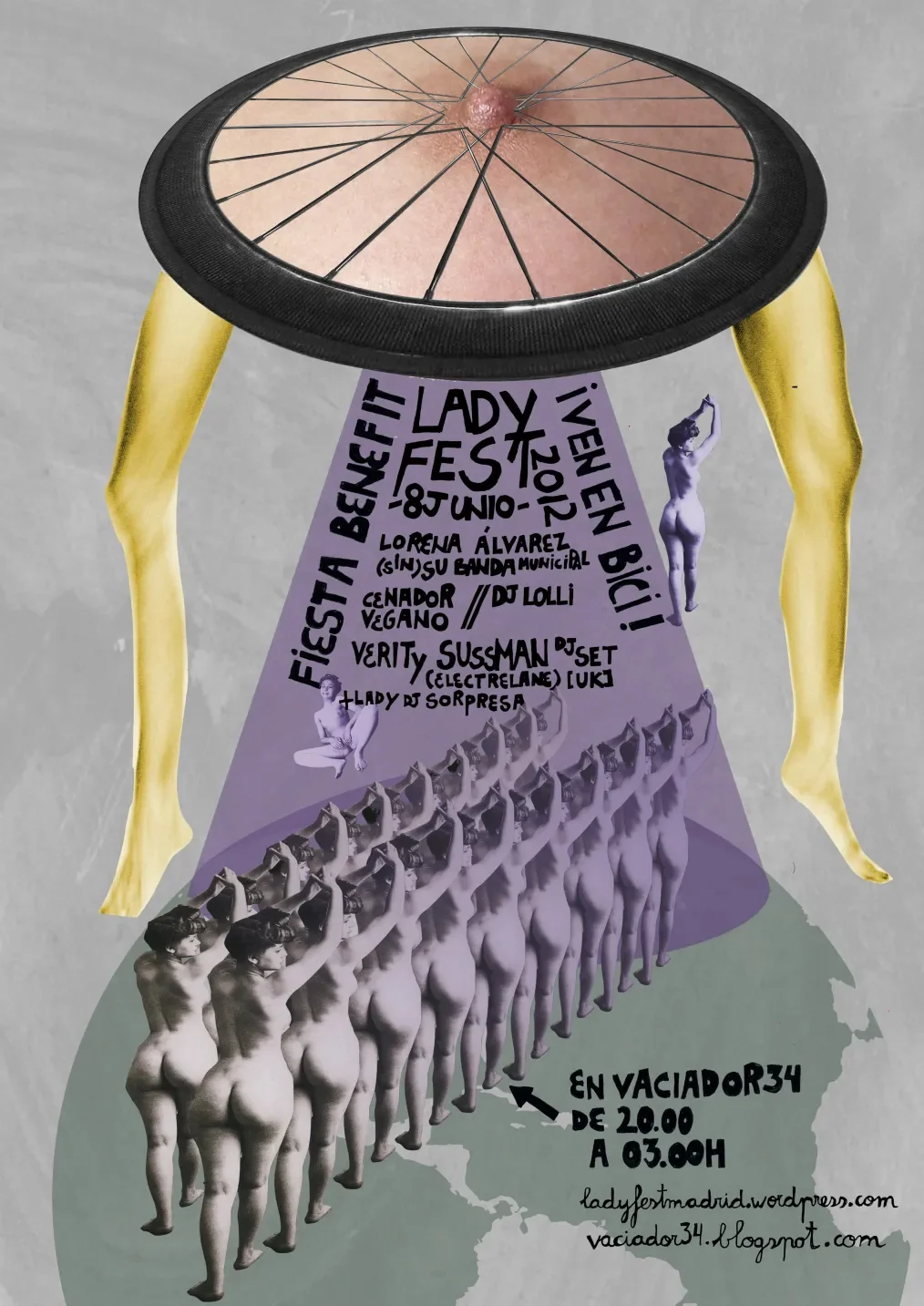
Riot Grrrl’s reach becomes clearer when you look beyond its sound. At Great Park Gallery in Irvine, Grrrl Germs: Punk Feminism Goes Viral, 1991–2026 gathers more than 150 flyers and posters from over 30 countries, alongside zines and other materials spanning four decades. Presented by Daisy Chain Fields Festival, the exhibition makes a case for Riot Grrrl as a practice of making culture and community, as much as a musical lineage.
Curator Astria Suparak describes it as “an attitude and agenda that rejects patriarchy and oppression.” That idea comes through in the range of events represented: many center on music, but others make room for film, visual art, performance, writing and hands-on learning. Suparak’s selection follows how people have adapted the movement to their own communities, causes and creative forms. Across the world, the flyers show an idea that can travel without settling into one look or one genre.

Flyers as records of shared work
Some of the exhibition’s strongest connections emerge in the causes its organizers took up. Across Brazil, Kazakhstan, South Africa and the United States, Suparak found flyers for fundraising events supporting people affected by gender-based violence. A Philippine exhibition called attention to female agricultural workers. In South Korea, one flyer announced a collective protest organized in response to an illegal declaration of martial law.
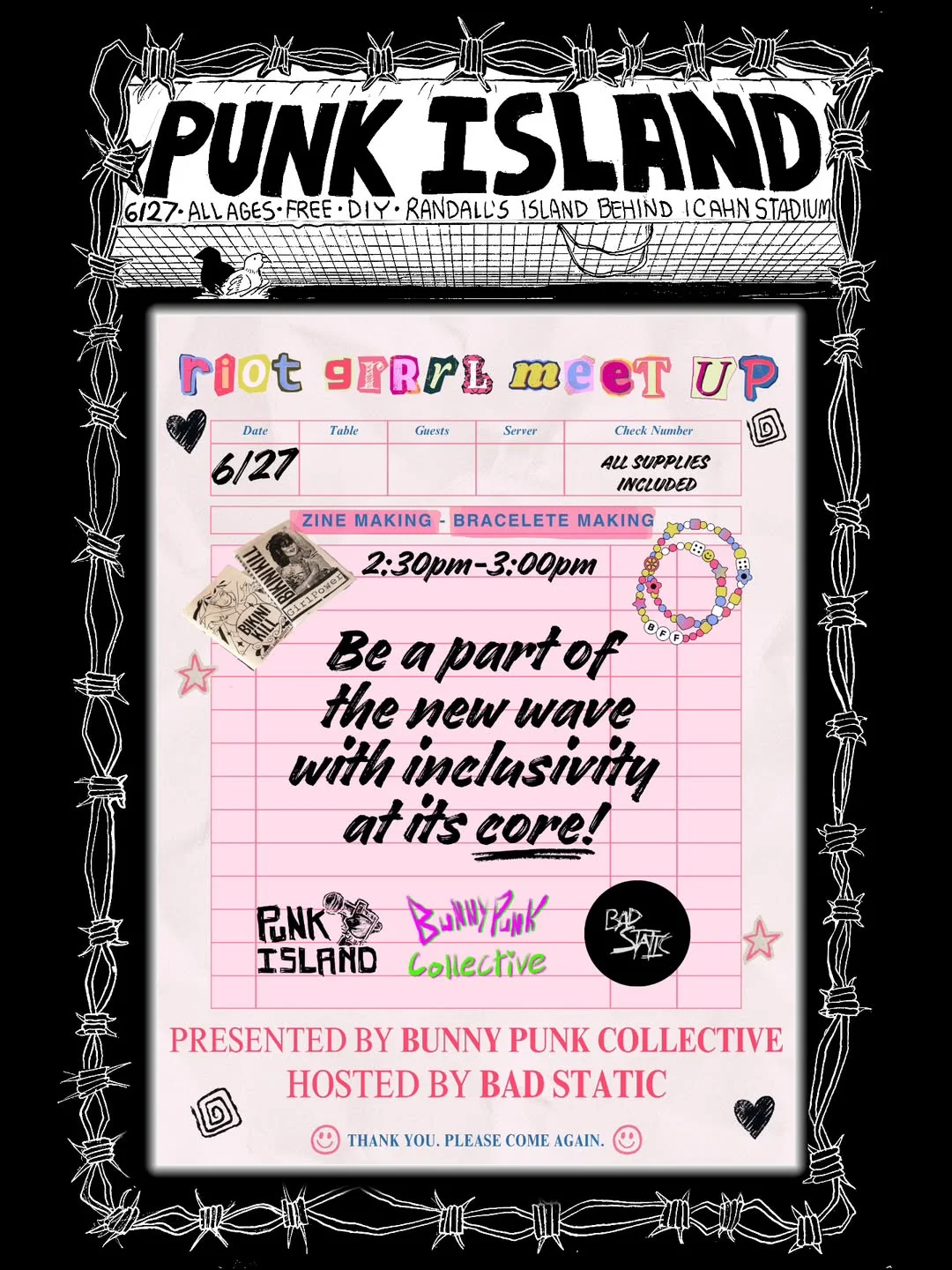
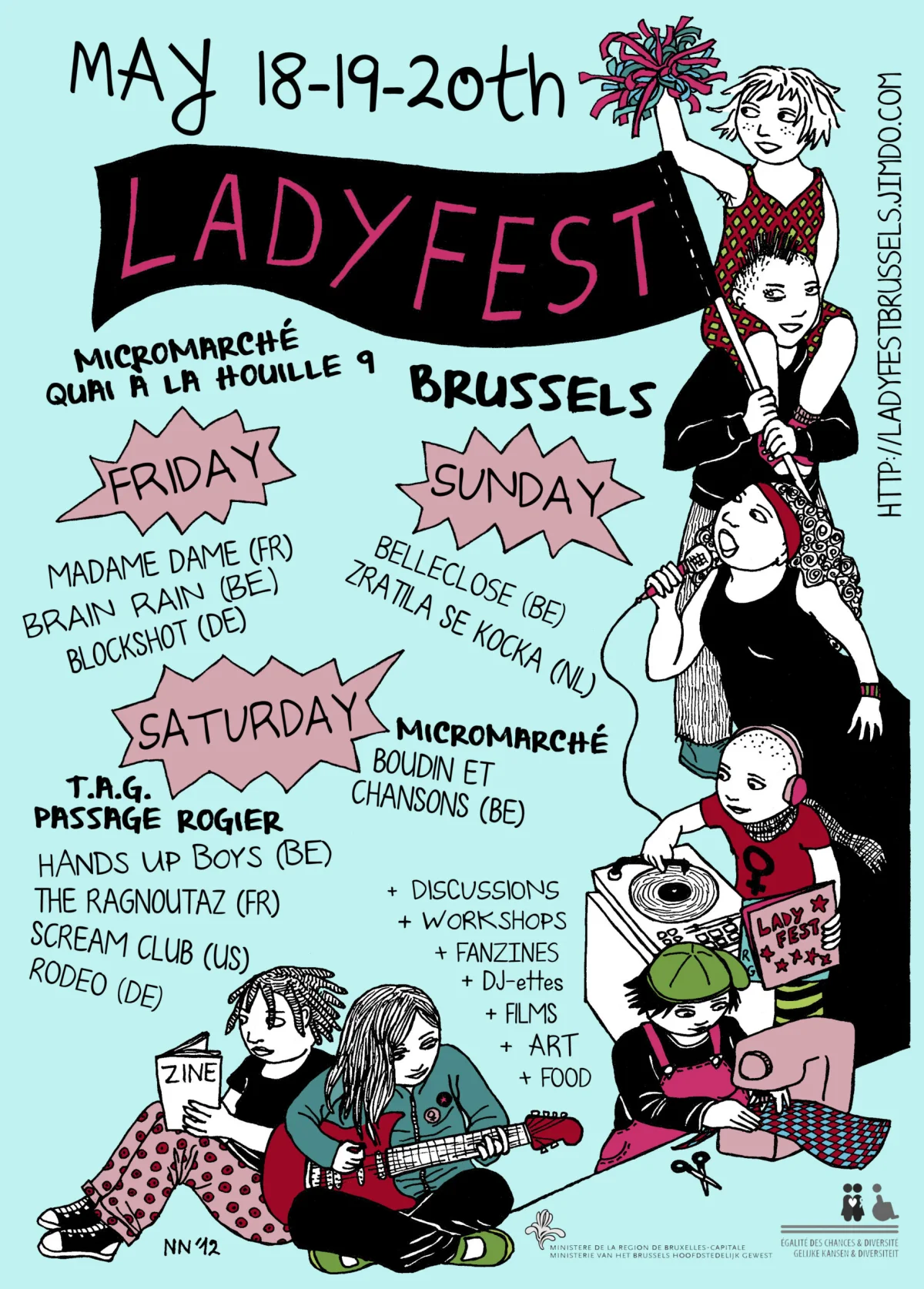
The materials also document the work that happens around performances. Workshops and skillshares appear often, covering self-defense, zine-making, DIY healthcare and art-making. These gatherings treat creative skills as something people can share and build together. A flyer might advertise a band alongside a space to make art, watch films or trade ideas; the event itself becomes a meeting point for different forms of expression.
That range helps explain why the exhibition resists a narrow definition of Riot Grrrl. Music may draw people in, but the printed material maps a wider set of relationships: who gathers, what they make, and what they want to change. The handmade format gives those aims a direct, local voice. A poster can announce an event and carry its message into streets, venues and community spaces at the same time.
A visual language with room to change
There’s no single Riot Grrrl style on these walls. Suparak points to images of women, girls and genderqueer people playing instruments, singing, dancing, filming and sewing. They appear in bubbly illustrations, gothic drawings, restless collages, altered comics and documentary photographs. Hearts, stars and female symbols sit alongside raised fists and banners, mixing playful marks with signs of protest.
The visual variety matters because it shows the movement being remade in different places and at different moments. Some posters are polished; others wear their cut-and-paste process on the page. Together, they make DIY design feel less like a uniform aesthetic than a means of getting an idea into circulation. Their differences are part of the record: each flyer reflects the people and scene that made it.
Fashion enters the conversation
Loewe’s backing brings a fashion house into a project about punk music and radical feminism. Suparak said she was delighted to learn, weeks before the exhibition opened, that the Spanish brand would support it. She described Loewe as trusting her vision for Grrrl Germs, and pointed to the need for more backing for arts work as funding diminishes and arts, educational and publishing institutions close.
The connection between fashion and Riot Grrrl sits in the exhibition’s interest in self-presentation and creative agency. Clothes, images and printed matter can all help a community express its values. That doesn’t make a fashion label the author of the movement; here, the emphasis remains on the people who made the materials and sustained their scenes. Loewe’s involvement draws attention to that intersection while Suparak’s curatorial choices keep the flyers at the center.

A legacy that keeps changing shape
Suparak’s research turned up musicians who identify with Riot Grrrl or name it as an influence while working in hip-hop, electro, surf, industrial, goth and pop. Regional listening areas in the exhibition bring together artists from Africa, Asia, Europe, Latin America and North America, making the range audible as well as visible.
Each scene responds to its own location, era and circumstances, Suparak says, and new chapters continue to appear. Her interactive map, color-coded by decade, can be explored online and inside the exhibition. She also invites visitors to contribute Riot Grrrl chapters and Ladyfest gatherings, extending the map through first-hand knowledge.
That invitation gives the project an open edge: its archive can grow as people add the histories they know. Grrrl Germs leaves viewers with a useful way to read the movement’s legacy—not as a fixed look or sound, but as an ongoing exchange between creative expression, shared skills and local action.